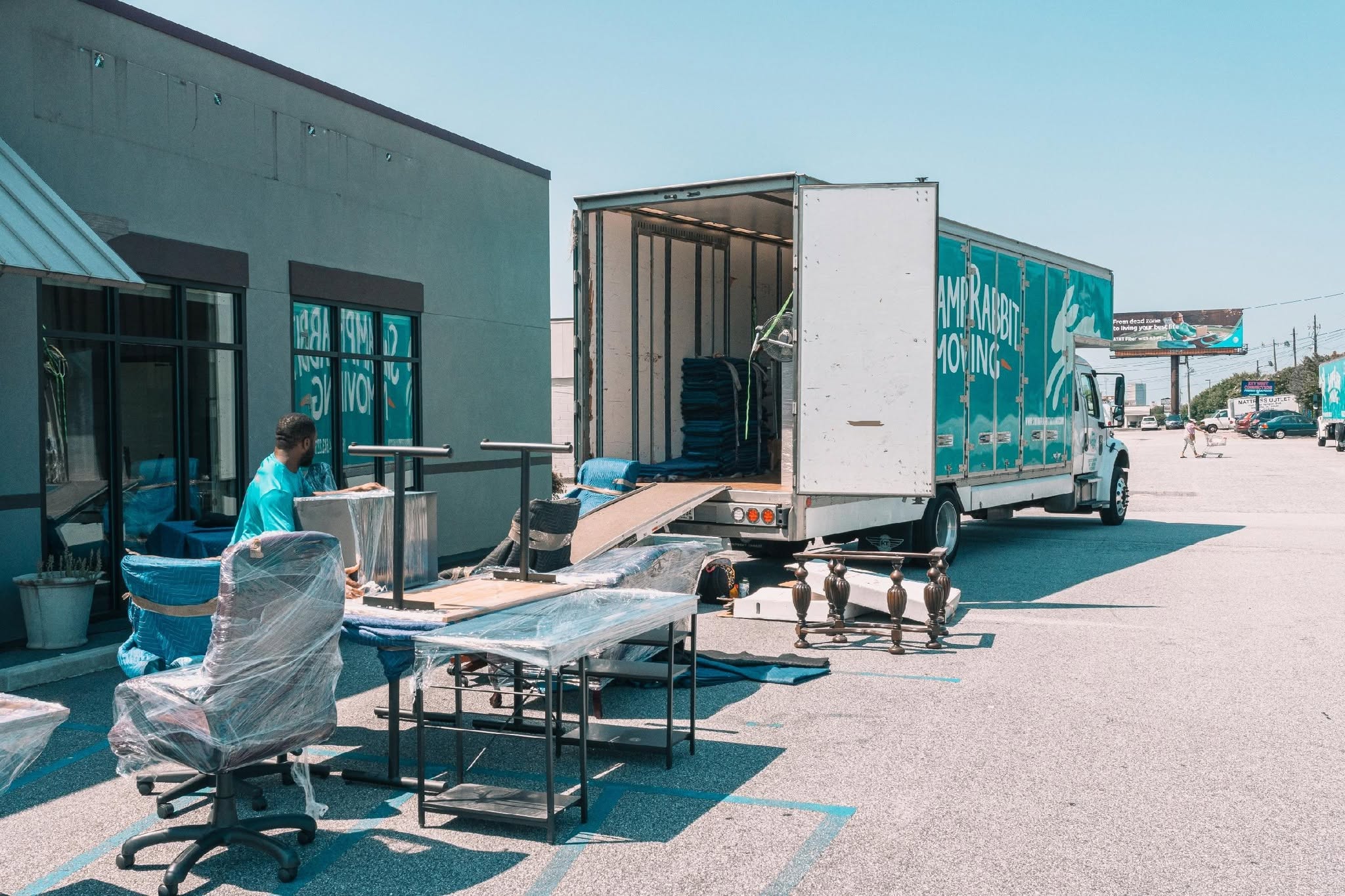
An office move is judged on one number, which is how many working hours your team loses. Everything else, the truck size, the crew count, the packing method, exists to protect that number.
Swamp Rabbit Moving & Storage is a full-service moving company that runs business relocations across the Golden Strip corridor, and we plan the job around your building's access rules rather than our own convenience.
We have handled more than 10,000 moves and keep a claims rate under 1 percent. On a commercial job, that figure matters a lot, because a damaged server rack is not a scratched dresser.
Before you hire anyone, get clear on what the building allows, what your equipment needs, and where things go if the new space is not finished on time. It's a short list, kind of, but it saves a lot of headaches.
A Commercial Move Runs on the Building's Calendar
Most office buildings in Simpsonville, SC, and around Greenville County restrict when a moving truck can be at the dock. Some allow it only after 6 pm, some only on weekends, and some require a reserved freight elevator with a window measured in hours rather than days.
Those rules are set by a property manager, not by you, and they are usually the biggest constraint shaping the whole plan.
Find out what your lease and your building actually permit before you start collecting quotes. Ask about dock access, elevator reservations, protective floor and wall coverings, certificate of insurance requirements, and any restriction on which days the work can happen.
Good commercial movers ask those questions on the initial call, because they are planning the job properly. A mover who quotes you a price without asking is quoting a house move and calling it an office move.
What Separates an Office Move From a House Move
A household move has one decision maker and one destination. An office move has a facilities contact, a department head who wants their team back online by Monday, an IT lead who cares about nothing except the server room, and forty people who each want their own desk contents to arrive intact. Coordinating that is a different job from loading a living room.
Labeling carries the weight in a commercial relocation. Every box, monitor, chair, and filing cabinet needs to map to a specific room, desk, or department at the new address, because a crew that has to ask where something goes is a crew standing still.
A good crew builds that map with your facilities contact before moving day, usually with a floor plan and a numbering system that matches the labels on the boxes. The unload then runs at the speed of the truck rather than the speed of the questions.
Plenty of people look at the top 5 moving companies for 2026 before they call anyone, and that's a fine place to start. Just keep in mind that a ranking can't tell you how a crew handles your freight elevator.
Equipment and Records Need a Separate Plan
Workstations, monitors, network gear, and phone systems all disconnect and reconnect in a specific order, and the crew moving them is rarely the team that configures them. Agree early on who unplugs what, who packs the cables, and who is responsible for bringing systems back up at the other end.
Most problems on a commercial move trace back to that handoff being assumed rather than agreed, and that's part of what you should expect from movers on a business job.
Paper records carry their own requirements. Client files, HR records, and financial documents often cannot sit unattended in a hallway or ride in an unsecured truck, and some industries have rules about chain of custody that a mover has to work within.
Say so upfront. We handle filing systems, secure document transport, and sensitive equipment regularly, and knowing the constraint in advance changes how the truck is loaded rather than causing a problem at the dock.
Confirm these before you sign anything:
- The access window at both buildings, including dock, elevator, and after-hours rules
- Who handles IT disconnection and reconnection, and on which side of the move
- A labeling system tied to a floor plan of the new space
- Insurance documentation the property manager requires from the mover
- A named point of contact on your side who will be on site throughout
Trying to line up an office move around a tight building schedule in Simpsonville? Give us a call at (864) 643-2213, and we'll talk through your equipment and records before anything gets packed.
Staging Storage Bridges the Gap Between Leases
Commercial leases rarely line up neatly. The old space has to be vacated on the 31st, and the new one is not finished until the 15th, or a build-out runs two weeks past schedule, and suddenly there is nowhere for thirty desks to go. That gap is the most common reason a business move goes sideways, and it is entirely predictable.
Our 40,000 square foot climate-controlled warehouse in Simpsonville handles that gap directly. Furniture, equipment, and stock can come out of the old building on the lease deadline and wait in a monitored, temperature-stable space until the new office is ready to receive them.
Because the same company is doing the move and holding the goods, there is one contact and one invoice rather than a handoff between a mover and a storage facility. Space fills up in the busy months, which is worth knowing if your lease ends in summer.
Downtime Is the Cost Worth Measuring
Comparing commercial quotes on hourly rate alone misses the number that actually matters. A crew that costs less per hour but takes an extra day, or that loses half a morning because nothing was labeled, costs your business more than the difference on the invoice.
Work out roughly what an hour of lost productivity is worth across your team and the comparison changes shape.
Scheduling is the other lever. Moving over a weekend or across a Friday evening into a Saturday often means staff arrive Monday to a working office instead of a room full of boxes.
That usually requires booking eight to twelve weeks out, since weekend crews and building access windows are limited. Planning the prep work in the right order matters just as much as the date itself.
Vetting a Commercial Mover Before You Sign
Ask any company you are considering to describe a business move they have run that resembles yours in size and complexity. Ask whether their own crews do the work or whether the job gets handed to someone else.
Ask what happens if something is damaged, how a claim is handled, and how long it takes. Clear answers to those three questions tell you more than any marketing page.
Then read the estimate rather than the total. It should break down crew size, the hours anticipated, any after-hours or weekend rate, materials, specialty handling, and storage as separate lines.
A single number with no detail behind it is not an estimate, it is a guess that you will be asked to pay for later. Businesses across Simpsonville, SC compare us on exactly those terms, and our 98 percent referral rate comes mostly from facilities managers who moved once and called again.
Book a walkthrough of your Simpsonville office before you set a date. Bring your lease terms and your building's access rules to that meeting, and the schedule you leave with will be one your team can actually work around.
Have questions about planning your office move, or just want to talk through your options first? Contact us, and we'll help you figure out the right next step. You can also reach us at (864) 643-2213 or sales@swamprabbitmoving.com. You'll find us at 1102 Old Stage Rd, Unit D, Simpsonville, SC 29681.
Related Topics: