Everything you need to eliminate stress from your next move. Affordable moving, packing, and unpacking on residential, commercial, local, and long-distance moves.
We are mindful of getting the job done in a fast and efficient manner, all while still caring for your items. Ready to get your move on the road? Let our fast and friendly Rabbits get the job done for you!
We understand that moving can be stressful. At Swamp Rabbit Moving, we believe it doesn’t have to be! No matter where you’re moving to or from, whether it’s an apartment, a new house, or even long-distance, the Rabbits are here to make your move easy and reliable. We are licensed, bonded, and insured, so you can have peace of mind that your belongings are in good hands.
Inventory Management Systems Greenville Movers Use to Track Stored Belongings
Anything that goes into storage during a move needs a record attached to it. Nobody remembers what was in box 47 three months later. Our crews inventory every item before it leaves your home, tag it, and log where it sits.
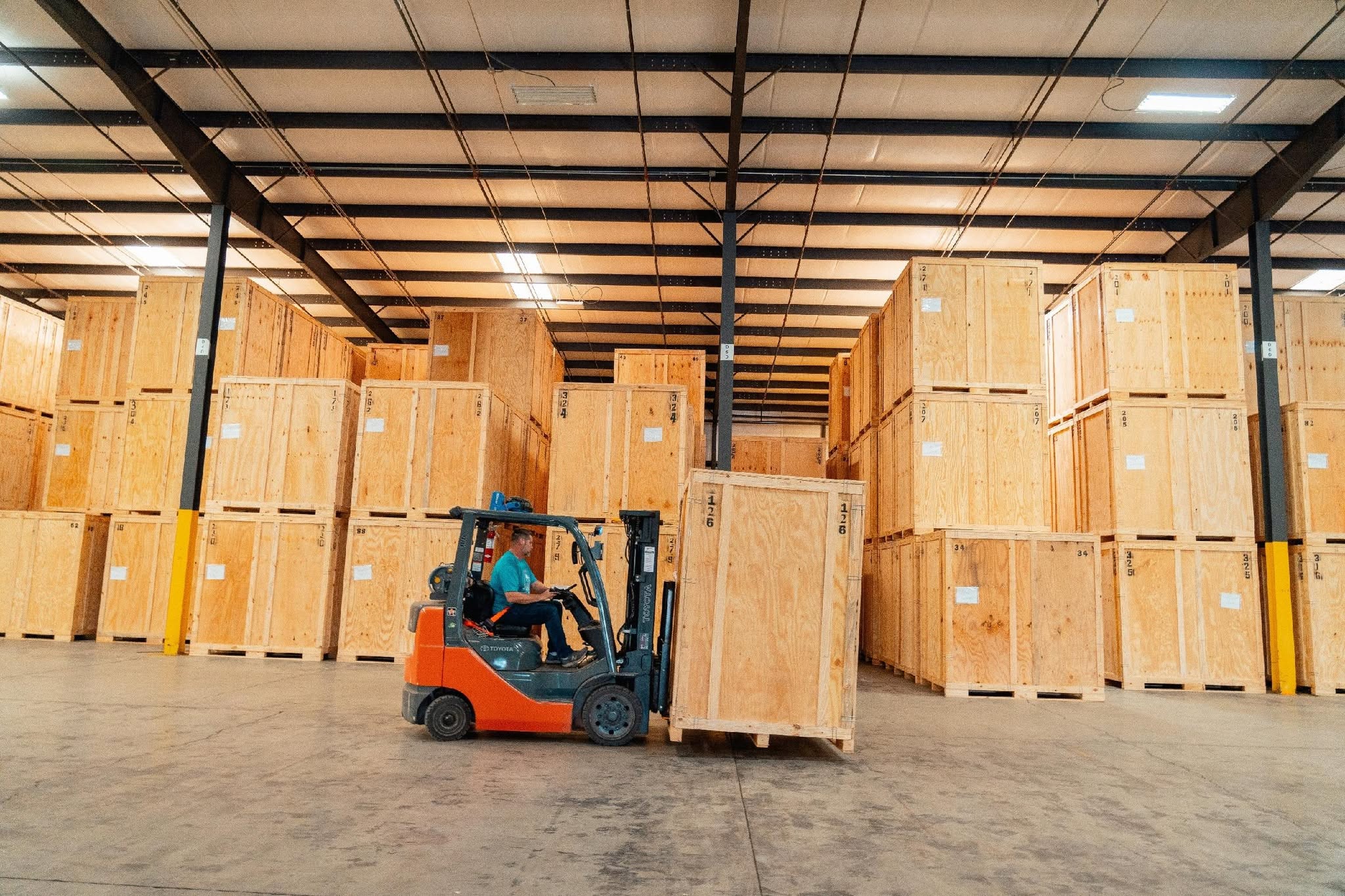
The warehouse is 40,000 square feet in Simpsonville. That record is what lets us pull one dresser out of a vault without opening four others along the way. The nice part is that expert movers hand you a written inventory you can read and keep before anything goes into storage. It’s a great bit of peace of mind to know exactly where your things are.
A working inventory is more than a box count. Each item gets an identifier, a short description, and a condition note taken at the time of loading. It also gets an assignment to a location inside the facility.
The condition note matters more than people expect. A scratch documented on load day is a scratch nobody argues about on delivery day. Maybe that sounds picky, but it's the whole point.
The location assignment is what makes retrieval possible. Warehouse storage is not one room where belongings are stacked against a wall.
Items are distributed across different formats based on what they are, and our storage services keep a 40,000-square-foot building organized that way. The record ties your dining set to a specific vault or rack position, so retrieval becomes a lookup rather than a search, which really shows up when a closing date moves up on you.
How Items Are Tagged Before They Leave Your Home
Tagging happens at the origin address, not at the warehouse. The sequencing is deliberate. Once a truck is loaded and driven away, the chance to note condition in the room itself is gone. Our crews work room by room, applying numbered tags as each piece is wrapped and staged.
Boxes you packed yourself get logged by the label you wrote. That is one reason we push people to label by room and contents rather than writing "misc" on twelve boxes. Honestly, "misc" helps nobody, least of all you.
Furniture is handled differently from cartons. A bed frame that comes apart is tagged as a set, so hardware, rails, and headboard stay associated. Disassembled components separated across a warehouse are the most common cause of a frustrating reassembly later. The same logic covers table leaves, shelving pins, and the feet that unscrew from a sectional.
Furniture disassembly and reassembly is part of every move we handle. The inventory record is what makes the reassembly half work months after the disassembly half. Just think of it as the thread between the two.
The Storage Formats That Change How Tracking Works
Different belongings need different storage, and the format determines how the record is built. Our Simpsonville facility runs four of them. Each one suits a different kind of load, and each one is logged a different way.
Format
What it holds
How it is tracked
Vaults
Household goods from a residential move
Vault number, contents logged at load
Racking
Oversized items that cannot stack
Rack and shelf position
Palletized
Boxed goods and commercial inventory
Pallet identifier
Oversized
Boats, collector vehicles, pianos
Individually, by item
A household move usually ends up in vaults. These are large wooden containers, loaded at intake and then sealed. Your belongings stay together as a unit and are not handled again until they leave.
Oversized storage works the opposite way. A single item becomes its own record, because a piano has nothing to share a container with. Knowing which format holds your items tells you how much notice a retrieval will need. The same logic applies when you are working out the size of a storage unit to rent on your own.
Planning to store a few things and not sure which format fits?Give us a call at (864) 643-2213, and we'll talk it through before anything leaves the house.
What to Ask a Greenville Mover About Their Inventory System
Most companies will say they track what they store. The useful step is asking how, before anything leaves your house. Five questions sort a real system from a promise, and none of them take long to answer.
Do I receive a copy of the inventory document, and when?
Is item condition recorded at the origin address or at the warehouse?
How are disassembled furniture components kept together?
How much notice do you need to retrieve one specific item?
Is the facility climate controlled and monitored around the clock?
The last question carries more weight here than it would further north. Summers in Greenville, South Carolina bring heat and humidity that damage wood furniture, electronics, artwork, and anything stored in cardboard. A perfect inventory record is no help if the conditions ruin what it describes. Our climate-controlled storage in Simpsonville is monitored 24 hours a day.
Every residential move we handle includes two months of free storage there. A gap between move-out and move-in does not become a separate vendor hunt. If the gap runs longer, it's worth knowing how short-term vs. month-to-month contracts differ before you sign anything.
Inventory Tracking for Commercial and FF&E Projects
Business storage across Greenville, SC runs on a different rhythm than household storage. A company is rarely storing everything and retrieving it once. Shipments arrive over weeks, sit, and then release to a site on a schedule that shifts with the construction timeline. The record has to support partial releases rather than one clean outbound move.
Our warehousing and FF&E work covers receiving, inspection, inventory tracking, and scheduled site deliveries. A hospitality or multifamily project might have twelve deliveries arriving from different vendors.
All of them are logged against the same project, inspected for damage on arrival, and released in the order the installers need them. That is a logistics record rather than a storage list.
Ask about it directly if your business is comparing warehouse partners across the Upstate. It's a bit of a different conversation than a household move, so just say so up front. Better to sort that out before any pallet shows up.
How Good Records Change What Happens When Something Goes Wrong
Claims are rare in this work when the process is sound. Ours run below 1 percent across more than 10,000 completed moves, and the inventory record is part of why. Condition documented at the origin turns a dispute into a comparison of two records. Without it, you are left with an argument between two memories.
The record also matters when nothing is damaged, and something is simply missing. A box that does not turn up at delivery is almost always still in the warehouse. That holds two weeks into a move, and it holds two months into a short-term or month-to-month arrangement. A tagged, located inventory turns that from a panic into a phone call.
Customers who moved with us point to communication as what carried them through a hard day. Clear paperwork is most of what makes that possible. You know, nobody wants to chase a missing box by memory.
Check the inventory against what comes off the truck before the crew leaves. Keep your copy. It is the cheapest protection available on a move, and it takes ten minutes, maybe less.
Want to talk through how your belongings would be tracked, or just weighing your storage options? Contact us, and we'll help you figure out the right next step. You can also reach us at (864) 643-2213 or sales@swamprabbitmoving.com.
We began as a small company, me and a few guys, and 1 truck in October of 2020. Since then, we have grown to 19 trucks, a staff 60, and a 40,000-square-foot warehouse. To say I’m blessed with a great team is a vast understatement. During this journey, we have provided living wage jobs to all our employees and poured back into our community in big ways. That is something I’m truly proud of.