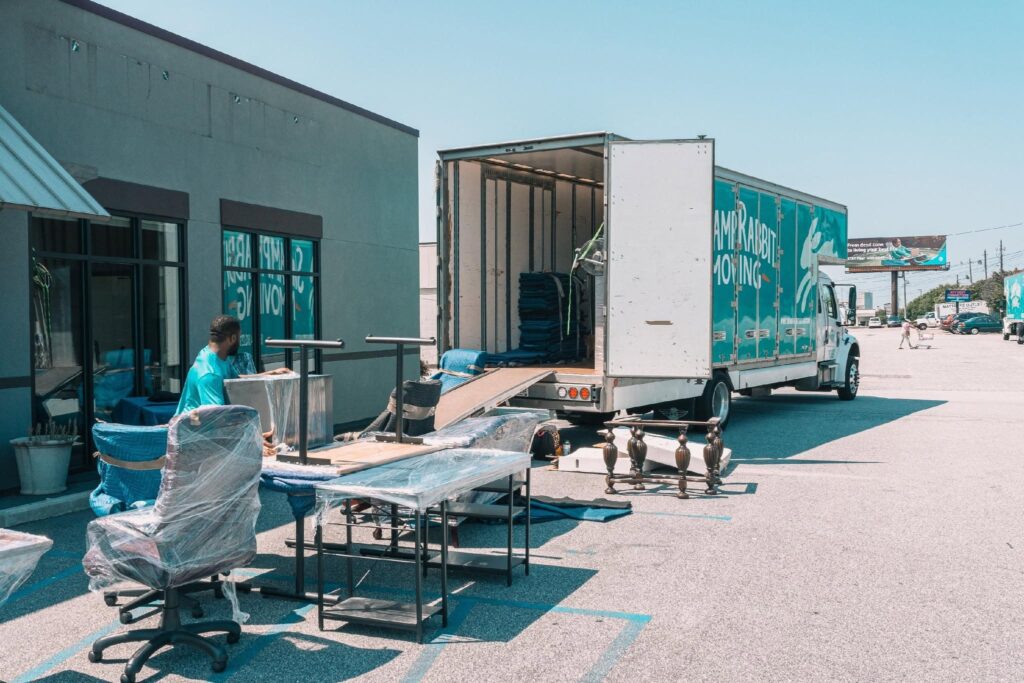
Office moves are usually measured in furniture, and that is the wrong unit. Desks and chairs can arrive late without stopping anyone from working. A server that comes up with a failed drive, or a network closet rebuilt from memory because nobody labeled the patch panel, stops the entire business. The technology portion of a commercial move deserves its own plan, its own owner, and its own timeline, alongside the broader steps in our guide to organizing a smooth office move.
Responsibility splits cleanly once you draw the line in the right place. Your IT team or managed provider owns the data, the shutdown, and the restart. We own the physical handling, the sequencing, and the transport. Our commercial moving crews in Greenville work to that split on every office relocation, which keeps anyone from assuming the other side has it covered.
Why IT Moves Need Their Own Plan
Downtime is the real cost of a business move, and it is almost always driven by technology rather than by furniture.
A company that reopens on Monday with phones ringing and workstations logged in has had a successful move regardless of where the filing cabinets ended up. A company whose staff spend Monday on hold with a provider has not, even if every box arrived on schedule.
Greenville has absorbed a steady flow of relocating and expanding companies, and that growth has pushed businesses into converted downtown buildings, Verdae and Woodruff Road office parks with very different infrastructure from what they left.
Older buildings may have limited riser space or dated cabling. Newer ones may have provider agreements already in place that take weeks to transfer. Scoping the destination before you book commercial movers is what prevents a clean move into a building that cannot yet carry your business.
What Your IT Team Handles Before We Arrive
Nothing we do substitutes for a proper shutdown, and no moving crew should be powering down a server. The work ahead of move day belongs to the people who know the environment, and it needs to be finished before the first dolly appears.
- Full verified backup of every system, with a restore tested rather than assumed
- Documented rack layout, cable map, and patch panel labeling, photographed as well as written
- Asset inventory with serial numbers, matched against what leaves and what arrives
- Clean shutdown sequence for servers, storage arrays, and network hardware
- Circuit and provider transfers ordered well ahead, with confirmed activation dates
- Decommission list for hardware that is not making the trip
Labeling is the step that gets skipped and the one that costs the most. Every cable, port, and device should be tagged before anything is unplugged, because reconstructing a network closet from recollection on a Sunday afternoon is how a four-hour restart becomes a two-day one.
Packing and Transporting Servers, Monitors and Network Gear
Technology travels badly in standard moving cartons. Server chassis are heavy, unevenly weighted, and intolerant of shock, with rails and drive bays that take damage from handling that furniture would shrug off. Monitors need to ride upright and padded rather than stacked. Anything rack-mounted should move in its original orientation wherever possible.
Hard drives and spinning media deserve particular care, since vibration over a bumpy loading dock does damage that does not show up until a drive is powered back on at the other end.
Our crews use anti-static materials, dedicated padding, and secured loading for equipment rather than treating it as another box, and pieces that need more protection get built-to-fit cases through our custom crating for sensitive equipment.
Chain of custody matters as much as padding on a technology move, which is why the inventory that leaves your old server room is the inventory that gets checked in at the new one.
Planning an office move in Greenville with a server room attached? Tell us what the environment looks like, and we will build the sequence around your downtime window, with a free written estimate and no obligation.
Sequencing the Move Around Business Hours
Most IT relocations in Greenville run on a Friday evening through Sunday window, and the sequence inside that window decides whether Monday works.
Network and server infrastructure should land first so it can be powered up, tested, and corrected while there is still time to fix something. Workstations follow. Furniture and storage come last, because a desk in the wrong place costs minutes while a switch in the wrong state costs the week.
Phased moves suit larger businesses better than a single weekend push. Half the staff relocates while the other half keep working, then the groups swap once the new site is proven. That requires both sites running at once for a stretch, which costs more in the short term and buys a fallback position that a single-weekend move does not have.
We run after-hours and weekend schedules as a matter of course, and our fleet of 19 trucks lets us put multiple crews on the same window rather than stretching one crew across three nights. It pays to plan and sequence your office move alongside your IT provider so both schedules point at the same deadline.
Testing and Handover at the New Office
Finish the job with a test rather than a signature. Bring systems up in the same order they were taken down, confirm core infrastructure first, then network connectivity, then shared storage and line-of-business applications, then individual workstations and phones. Issues found at midnight on Saturday have a path to resolution. The same issues found at eight on Monday do not.
Walk the space with your crew lead before they leave, check the asset inventory against what is physically in the room, and document anything that arrived marked or damaged with photographs on the spot.
Our team has handled more than 10,000 completed moves since Chris Sweet founded the company in October 2020, carrying a claims rate under one percent and a 4.9-star average across more than 1,214 five-star reviews, and every commercial job runs with our own trained crews rather than subcontracted labor.
For businesses receiving new furniture or equipment at the destination, our warehousing and FF&E service can stage deliveries so everything arrives in the order your floor plan actually needs it.
Scoping a business move in the Upstate? Ask for a free written estimate, and we will build the plan around your downtime window rather than ours, with no obligation to book.
Related Topics: