Packing mistakes rarely reveal themselves until moving day actually arrives. A box that's too flimsy buckles the moment something heavier gets stacked on top. Plates wrapped in old newspaper often show up cracked or smudged with ink residue. Furniture left uncovered ends up scratched from rubbing against the truck wall during the drive across town. None of these problems are hard to avoid, but avoiding them means having the right supplies ready before you even start, which is why so many people look into the best Greenville movers when planning ahead, since good packing services often decide whether a move feels smooth or chaotic.
Here's what genuinely makes a difference for a Greenville move, and why each supply earns its place on the list.
Why Supply Quality Matters More Than Most People Expect
There's a common instinct to cut corners on packing supplies, especially when moving costs are already adding up. But the supplies are what stand between your belongings and damage during the move. A cheap box that gives out at the bottom of a staircase costs far more to deal with than a better box would have cost to buy.
This isn't about spending more than necessary. It's about choosing the right version of each item for what it's actually going to hold. A box that's fine for pillows is the wrong choice for dishes. Tape that holds at room temperature may perform differently sitting in a warm truck during a Greenville summer afternoon. Getting these decisions right at the start saves real frustration later.
1. Heavy-Duty Moving Boxes in the Right Sizes
Standard moving boxes come in a few sizes, and those sizes exist for a reason. Small boxes are for heavy items: books, dishes, tools, anything dense. Medium boxes handle a wider variety of household items. Large boxes are for light, bulky things: linens, pillows, loosely packed items that don't weigh much.
A large box packed with books is a lifting injury risk and a structural failure risk. The box isn't built for that weight, and neither is the person carrying it up a flight of stairs. When you're buying boxes, err toward more small and medium sizes than you think you'll need. You'll go through them.
Dish barrels are worth buying separately if you have a full kitchen. They're taller and heavier-duty than standard boxes, and they're built specifically for stacking dishes upright with enough room for proper padding between each piece. It's one of the more commonly skipped purchases that people end up wishing they'd made.
2. Packing Tape and a Quality Tape Dispenser
Tape is one of those places where the cheapest option creates actual problems. Low-quality tape that loses its grip can fail on a box during loading, transport, or unloading. If the bottom of a fully packed box gives out while someone is carrying it, the results range from inconvenient to dangerous.
Use actual packing tape, not masking tape or standard office tape. Packing tape is wider and designed to hold under the weight and friction of stacked boxes in a moving truck. Pair it with a tape dispenser. Pulling tape off a roll by hand and trying to apply it cleanly to the side of a box takes twice the time and produces a weaker seal.
A rough guideline: one roll per room, plus an extra roll in reserve. Tape gets used faster than most people expect, especially once you start reinforcing box bottoms, which you should do on any box that holds anything heavier than clothing.
3. Packing Paper and Bubble Wrap
Newspaper is not a substitute for packing paper. Ink transfers onto dishes, fabric, and porous surfaces, particularly in a warm truck over the course of a move. You can open a box at the other end and find your dishes need a full wash before they're usable.
Unprinted packing paper is inexpensive and avoids that problem entirely. Use it to wrap individual dishes, glasses, small decorative items, and anything that needs a buffer between it and whatever it's packed next to in the box.
Bubble wrap is best saved for genuinely fragile items: electronics, anything with a delicate surface, pieces with protruding parts that can catch or snap. It costs more per roll than packing paper, so using it strategically rather than wrapping everything in it keeps costs reasonable while still protecting what needs it most. The combination of paper for general wrapping and bubble wrap for the most fragile pieces covers almost any household without overspending on materials.
4. Furniture Pads and Stretch Wrap
Furniture pads, sometimes called moving blankets, are what protect wood finishes and upholstery from getting scratched or scuffed during transport. Without them, contact between furniture and the truck walls, metal edges, or other items that shift during the drive results in damage that's frustrating and sometimes costly to fix.
If you're using a full-service moving company, the crew brings pads as part of the job. If you're renting a truck and using a labor-only service, you'll either need to rent pads through the truck rental company or buy your own before moving day.
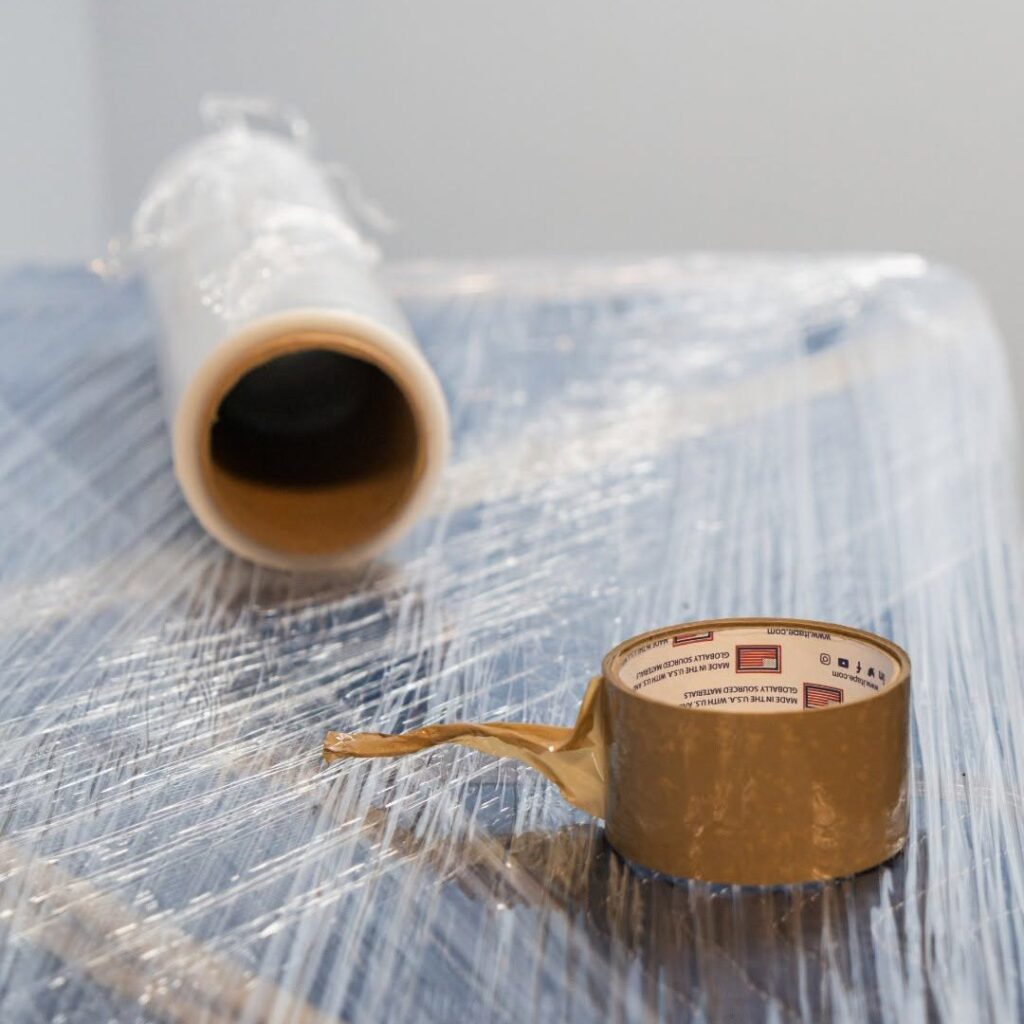
Stretch wrap is the plastic film used to secure furniture that has drawers, doors, or panels that could open during transit. It's also useful for bundling items together or adding a protective layer over furniture corners. A roll costs very little and provides meaningful protection for a wide range of pieces. Use it on anything with moving parts.
5. Permanent Markers and Labeling Supplies
This one gets underestimated until the moving crew is standing at the new home trying to figure out where 40 unlabeled brown boxes should go.
Label every box with the room it belongs in and a brief description of what's inside. Not just "kitchen." Something like "kitchen, everyday plates and glasses." It takes roughly 15 extra seconds per box and saves a significant amount of time on the unloading end when the crew can place each box in the right room without stopping to ask.
Write on at least two sides of every box so the label is visible regardless of how the box gets stacked in the truck. Use a permanent marker dark enough to read quickly in low light. Standard ballpoint pen and light-colored markers disappear once boxes are stacked.
Color-coded labels or tape strips work well for larger households. A strip of red tape means kitchen, blue means office, green means master bedroom. The crew can sort by color without reading anything, which speeds up unloading considerably.
When Gathering Supplies Yourself Isn't Worth the Effort
For some moves, buying and assembling your own supplies is the obvious choice. For others, including large households, tight timelines, fragile collections, and moves involving specialty items, handing the packing off to a professional team is simply the cleaner option. Our packing services team brings all necessary materials and handles packing under the same estimate as the move itself.
We also supply packing materials for customers who prefer to handle their own packing and just need the materials without sourcing them from multiple stores. If you're unsure what your specific Greenville move requires, our local moving team can walk through it with you during the estimate. For anything beyond standard household items, our specialty movers can advise on the right packing and crating approach before you commit to a plan.
Related Topics: