Everything you need to eliminate stress from your next move. Affordable moving, packing, and unpacking on residential, commercial, local, and long-distance moves.
We are mindful of getting the job done in a fast and efficient manner, all while still caring for your items. Ready to get your move on the road? Let our fast and friendly Rabbits get the job done for you!
We understand that moving can be stressful. At Swamp Rabbit Moving, we believe it doesn’t have to be! No matter where you’re moving to or from, whether it’s an apartment, a new house, or even long-distance, the Rabbits are here to make your move easy and reliable. We are licensed, bonded, and insured, so you can have peace of mind that your belongings are in good hands.
How Do Movers Handle Large and Heavy Items in Columbia, SC?
Large and heavy items move safely when the crew checks the full route before touching anything, breaks down whatever comes apart, and moves the rest on dollies and straps rather than by muscle. Most moving day damage traces back to one of those three steps being skipped.
A sectional that fits the living room of a home in Shandon does not automatically fit the hallway of an apartment in Five Points. Our residential moving crews in Columbia work the problem the same way every time, which is why a gun safe that took three people to wrestle into a garage comes back out without taking the door frame with it.
We look at the piece, and at the full path it has to travel, out of the current space and into the new one. Doorframe widths, stairwell angles, flooring type, and whether an item has to come apart before it can move all get settled before anyone lifts anything.
Skipping that step is where the real damage happens. A sectional that barely clears a doorframe is manageable with a plan and destructive without one, peeling paint and splitting trim on the way out.
Five or ten minutes of looking saves a great deal of explaining later. The walkthrough is also when we flag anything we are not able to load, since a few categories cannot go on a moving truck at all.
Breaking Items Down Makes More Moves Possible
Plenty of items that look immovable in one piece become straightforward once they are broken down correctly. Bed frames, sectionals, wardrobe armoires, large dining tables, and modular bookshelves all come apart in ways that make the move safer for the item and for the building.
Reassembly is included at no extra cost. Every piece we take apart goes back together at the new address, in the room you point us to, and we check it before we leave. That attention is a large part of how we keep furniture from picking up damage over the course of a move.
For homes in Northeast Columbia, Blythewood, and Lexington where furniture travels up or down several flights, breaking pieces down properly is what keeps the job on schedule.
The Equipment That Keeps Heavy Pieces Under Control
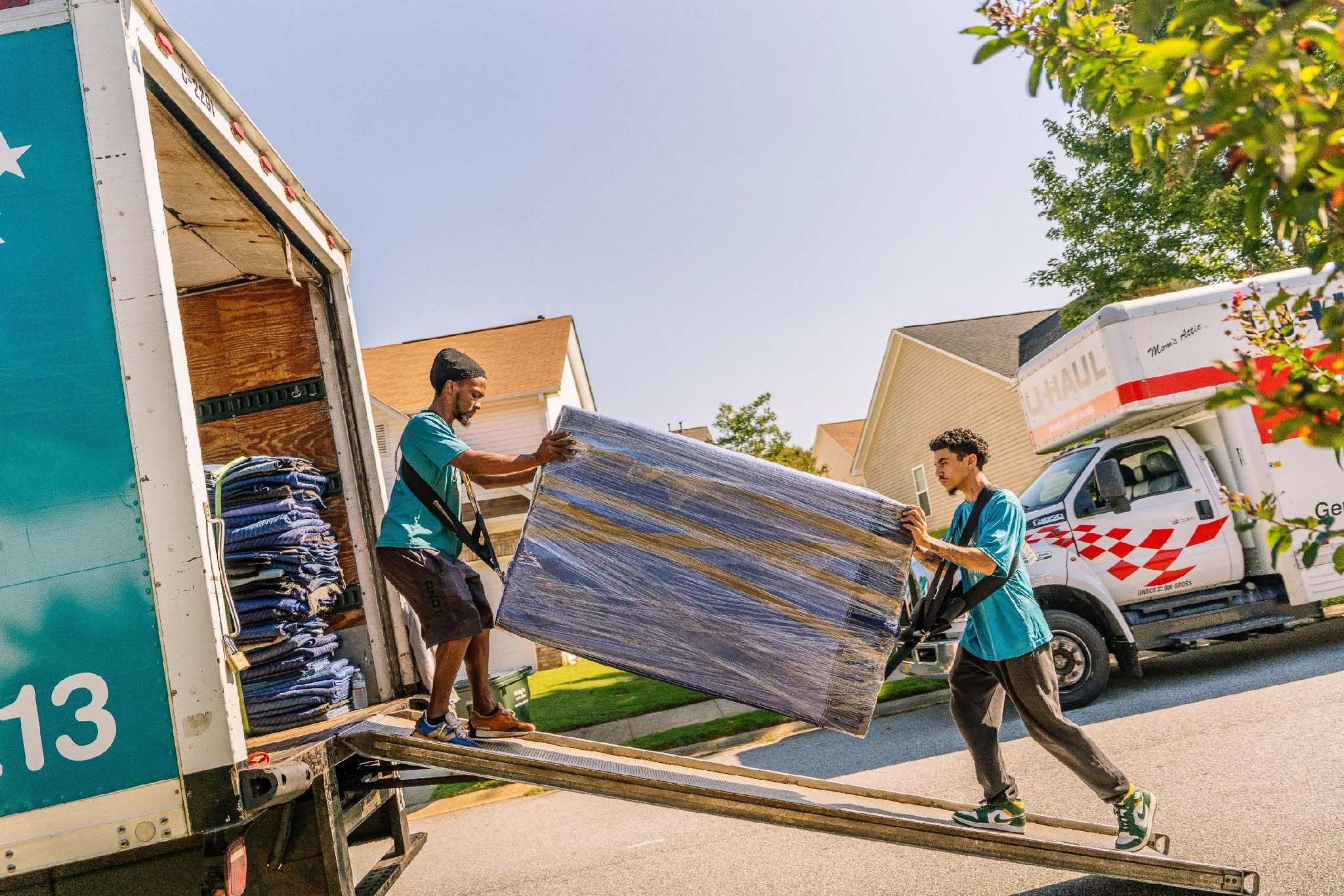
Moving heavy furniture and appliances without proper equipment is how people get hurt and how property gets damaged. Every one of our trucks carries the same kit, and every crew member is trained on it rather than improvising around it.
Furniture dollies for cabinets, dressers, and upholstered pieces
Appliance hand trucks built for refrigerator and washer weight distribution
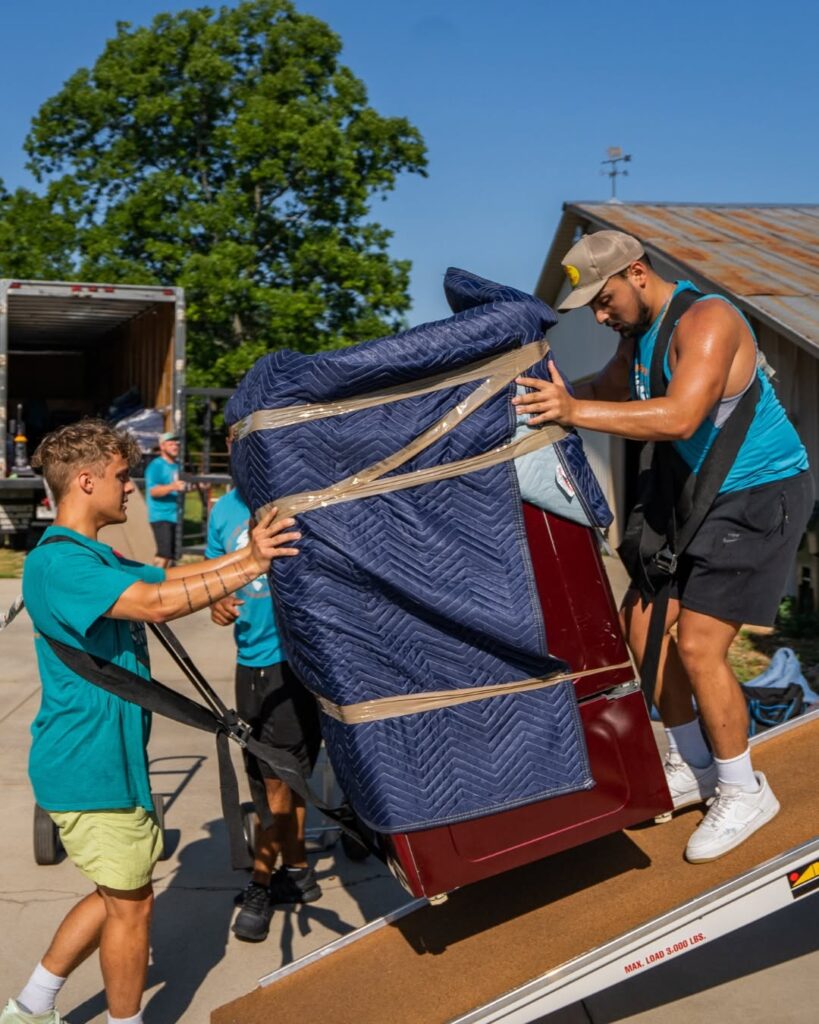
Moving straps that spread the load instead of putting all of it on whoever is at the bottom of the stairs
Stair climbing equipment for carries that cross several flights
Protective pads and blankets for the furniture and for the building
Pianos sit in a category of their own. An upright or a grand needs a piano board, correct strapping, and crew members who have moved pianos specifically rather than heavy furniture generally.
Stairwells, Elevators, and Tight Access in Columbia Buildings
Stairwells are where heavy item moves get hardest. Weight, angle, and limited room to maneuver combine into the situation that produces most injuries and most property damage when a crew is not working in coordination.
Our team positions enough people to control the load and calls direction at each step, so nobody is walking something heavy down a staircase alone.
In apartment buildings near USC, Benedict College, and the downtown corridor, elevator access and building time windows add a layer of planning. We confirm those details during the estimate rather than finding out at the curb that the freight elevator is booked or the loading dock is occupied.
Loading, Securing, and Placing Heavy Items
Getting a heavy piece out of the building is half the job. Heavy items go on the truck floor against the walls for stability, with lighter boxes filling in above and around them and blankets between everything so nothing shifts on the drive. Poor loading causes a real share of transit damage, and almost all of it is avoidable.
Loading order follows the delivery sequence. On a move with several stops across different Columbia neighborhoods, the second stop loads before the one that comes off first, so nothing has to come back off and be sorted again in a parking lot. The same logic governs how fragile pieces are packed and positioned around the heavy ones.
At the new address, you direct placement. Nothing lands in a default spot that you then have to rearrange after we leave, and we reassess access at the destination the same way we did at the origin, because the stairwell and corridor you are moving into are rarely the ones you moved out of.
Frequently Asked Questions About Moving Heavy Items
Standard crews handle gun safes, upright pianos, large appliances, and oversized furniture. Weight matters less than access. A heavy safe on a ground floor with a straight path out is simpler than a lighter armoire at the top of a narrow turning staircase. Describe the item and the route when you call.
Yes, and reassembly is included at no extra charge. Bed frames, sectionals, dining tables, armoires, and modular shelving are the pieces that most often need it. Our crews carry the tools, keep the hardware with the piece, and put each item back together in the room you specify before the job is finished.
We are licensed, bonded, and insured, so coverage is in place when something goes wrong on a job we are handling. Document any damage with photos as soon as you see it and raise it with our team the same day. The route assessment exists to keep that conversation from being necessary.
Usually, and the answer is settled during the walkthrough rather than on the spot. Most sectionals separate into pieces that clear a standard hallway. Where a piece genuinely cannot fit, we tell you before anything is lifted rather than forcing it and damaging the item or the trim.
Yes. Pianos require a piano board, correct strapping, and crew members experienced with pianos specifically. Uprights and grands differ in how they are prepared and secured. Mention the piano when you book so the right equipment and the right crew are scheduled for your date.
Get a Crew That Plans the Heavy Items Before Moving Day
If your move includes a safe, a piano, a sectional, or an appliance that worries you, say so when you call. Our scheduling team sizes the crew and the equipment around those pieces instead of sizing the job when the truck is already in the driveway. Estimates are free and come with no obligation.
We began as a small company, me and a few guys, and 1 truck in October of 2020. Since then, we have grown to 19 trucks, a staff 60, and a 40,000-square-foot warehouse. To say I’m blessed with a great team is a vast understatement. During this journey, we have provided living wage jobs to all our employees and poured back into our community in big ways. That is something I’m truly proud of.