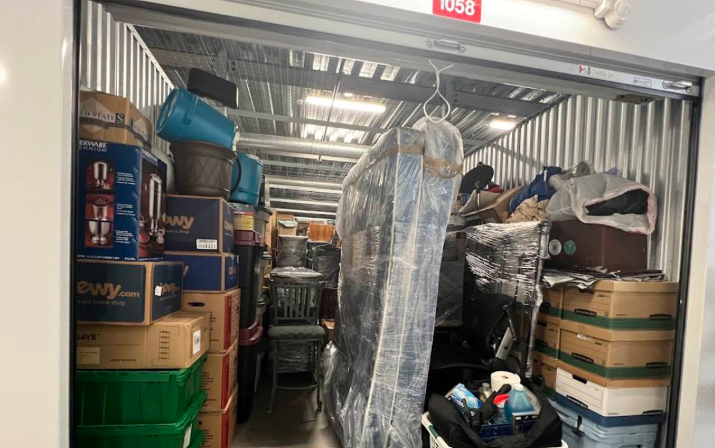
Not every moving company that says it offers storage owns a building. Plenty subcontract to a self-storage facility down the road, which works until something goes wrong and you are standing between two companies who each think the other is responsible.
The distinction matters more than the brochure suggests, because storage during a move is not the same product as a monthly unit you drive to on weekends. Your belongings arrive on a truck, get handled by a crew, sit for a period, then get handled again. Every one of those steps is a point where accountability can either hold or break. Our local moves under 150 miles and our storage run through the same company, the same crews, and the same invoice, which is the arrangement worth looking for whoever you hire.
Why Simpsonville Moves End Up Needing Storage
Storage usually enters the picture because two dates refused to line up. A closing slips by ten days. A lease ends on the 31st, and the new one starts on the 10th. A buyer wants possession earlier than the seller can be out. None of that is unusual, and none of it is anybody's fault.
The other common trigger is scale. Downsizing from a four-bedroom house into something smaller leaves furniture with nowhere to go while family decides what stays. Businesses clearing an office before the new suite is fitted out need somewhere to park workstations for a few weeks. Renovations push half a household into limbo while floors go down. In each case, the storage is a stage in the move rather than a separate project, which is why handling it as part of what full-service moving covers makes more sense than booking it apart from everything else.
What Climate Control Protects
Climate-controlled storage holds temperature and humidity steady year-round rather than tracking whatever is happening outside. In the Upstate, that difference is not cosmetic. A metal building in July sits well above ambient temperature for hours at a stretch, and humidity swings through the summer are substantial.
Wood is the first casualty. Solid timber expands and contracts with moisture content, and repeated cycling opens joints, lifts veneer, and cracks panels over a few months. Leather dries and splits. Electronics suffer from condensation when a hot space cools overnight. Artwork, photographs, musical instruments, and anything with adhesive in its construction all degrade faster in an uncontrolled unit. Our Simpsonville warehouse runs 40,000 square feet of climate-controlled space, which is the standard worth insisting on for anything you would be unhappy to replace.
Closing date slipping? We can hold your belongings and deliver when the new place is ready. Call (864) 643-2213 for a free written estimate covering the move and the storage together.
Security, Access and How Items Are Tracked
Ask how the facility is monitored and how your belongings are identified inside it. These two questions separate a real moving and storage operation from a company renting space somewhere. Our warehouse is monitored 24 hours a day, seven days a week, and that monitoring is ours rather than a landlord's.
Tracking is the part people rarely think to ask about. In a self-storage unit, you have a door and a padlock, and everything behind it is your problem. In a warehouse operation, items are inventoried, tagged, and recorded as they come in, so a specific piece can be located without unloading everything around it. Worth asking before you commit:
- Whether the company owns the building or rents space in someone else's
- How items are inventoried and labeled on intake
- What notice is needed to retrieve something mid-storage
- Whether the same crew who loaded handles the eventual delivery
- How the storage period is billed and when charges start
- What coverage applies while goods are being held
Short-Term Holding Versus Long-Term Storage
Short-term holding covers the gap, usually days to a few weeks, and it is the most common use by a wide margin. Items often stay loaded in vaults or palletized and ready to roll, because the whole point is a fast turnaround when your date firms up.
Long-term storage is a different arrangement. Furniture gets properly stacked and protected for a stay measured in months, and access expectations change because nothing is sitting ready to leave. Businesses use it for equipment and records between premises. Families use it during extended overseas postings or while building. We handle both from the same warehouse for residential and commercial customers, and either way it appears on the same written, itemized estimate as the move itself. Reading through moving quotes and package options will give you a sense of how storage sits alongside everything else on the paperwork.
Why One Company Handling Both Reduces Risk
Splitting the move and the storage between two companies creates a handoff, and handoffs are where claims get complicated. Something arrives damaged after three months in a unit and nobody can say whether it happened on the truck, during the load-in, in the unit, or on the way out. Two companies, two contracts, two sets of paperwork, and one customer caught in between.
Keeping both under one roof removes the question entirely. One company moved it, held it, and delivered it, so one company answers for it. That is how we run every job, with our own crews on our own trucks and no brokering to a third party at any stage. Our referral rate sits at 98 percent, and our claims rate is under 1 percent, across more than 10,000 completed moves and 1,214 or more Google reviews. If you are still comparing companies, working through the right questions worth asking before hiring movers will tell you quickly which ones control their own storage.
Need a mover and somewhere to put everything? We handle both from one building in Simpsonville, on one invoice. Call (864) 643-2213 or contact us for a free, itemized estimate.
Related Topics: