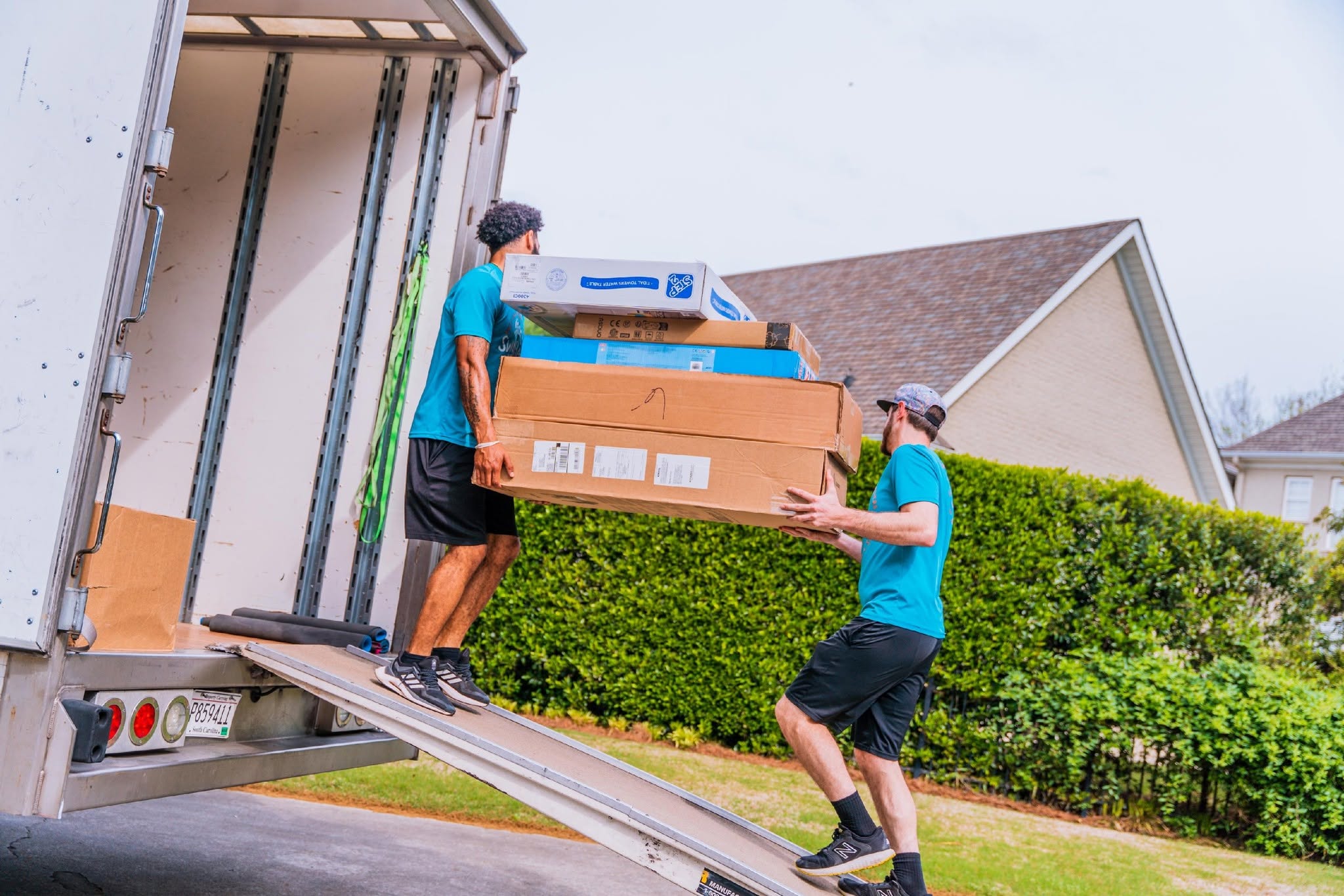
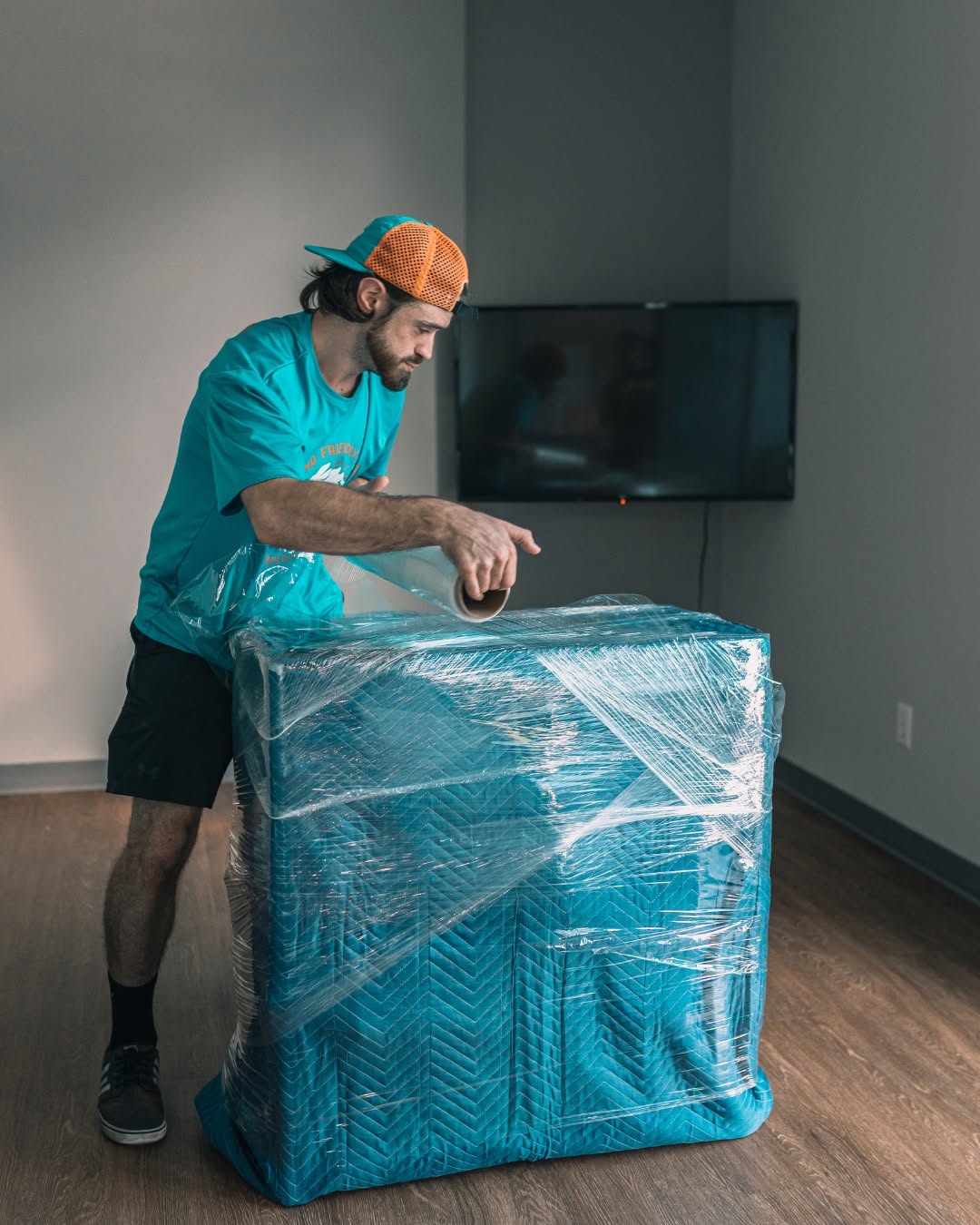
Everything you need to eliminate stress from your next move. Affordable moving, packing, and unpacking on residential, commercial, local, and long-distance moves.
We are mindful of getting the job done in a fast and efficient manner, all while still caring for your items. Ready to get your move on the road? Let our fast and friendly Rabbits get the job done for you!
We understand that moving can be stressful. At Swamp Rabbit Moving, we believe it doesn’t have to be! No matter where you’re moving to or from, whether it’s an apartment, a new house, or even long-distance, the Rabbits are here to make your move easy and reliable. We are licensed, bonded, and insured, so you can have peace of mind that your belongings are in good hands.
What Should You Do if Your Moving Company in Greenville Damages Your Belongings?
Realizing something was damaged during your move is a gut-punch moment. Maybe it is a scratch across a dresser that belonged to someone you loved, a cracked piece that cannot be replaced, or a box that clearly took a hard hit somewhere between your old place and your new one.
You hired a professional crew specifically to prevent this, so now you are just standing in your new home trying to figure out what comes next. The answer depends on how quickly you act and what documentation you have in hand.
Here is what to do, from the moment you notice the damage through the resolution process. And honestly, this is exactly why so many people end up searching for a top-rated moving company in Greenville, SC, before their next move, because getting it right the first time saves you this whole headache.
Stop and Document Everything Before the Crew Leaves
The first step is to photograph the damaged item before anyone unpacks further or rearranges anything. Get multiple angles of the item itself, and photograph any boxes, wrapping, or padding that shows signs of impact. If the moving crew is still on site, document the damage while they are present.
Getting that damage on record before the crew leaves is the single most valuable thing you can do in that moment. Skipping this step is one of the most common moving mistakes people make, and it can weaken your claim before it even starts.
If you can, ask the lead mover to note it in writing before anyone drives away. Once the truck is gone and the job is logged as complete, establishing exactly when damage happened becomes much harder to prove.
The window between completion and crew departure is short, and what you document in that window is what gives you the strongest position if a dispute comes up later.
Contact the Moving Company the Same Day
After documentation, reach out to the moving company directly. Do not wait until you have finished unpacking or until the following week. Call or email the same day. Describe what was damaged and how it looks now, and let them know you have photos.
A moving company that takes customer experience seriously will have a clear, defined process for this situation and walk you through it without hesitation. A company that suddenly becomes difficult to reach or offers vague responses to a damage report is telling you something about how the resolution process will actually go.
The sooner you report, the sooner you find out which type of company you are dealing with.
Understand What Your Moving Coverage Actually Covers
Most people assume that hiring a moving company means everything on the truck is fully protected if something breaks.
The default coverage that most movers include is called released value protection, and it covers items at a rate per pound rather than their actual value. A fifty-pound antique piece worth several thousand dollars would receive a very small payout under that structure.
This gap matters most for small, high-value items. Something like packing jewelry correctly before the move matters just as much as understanding your coverage, since damage to items like these often is not covered the way people expect.
If you want coverage that reflects what your belongings are actually worth, you either need to purchase full value protection from the moving company or check whether your homeowner's or renter's insurance includes in-transit coverage.
This is a conversation to have during the estimate process, before your move happens, so you know exactly what protection is in place. Asking after something breaks leaves you with fewer options and more frustration.
Why Licensing and Insurance Matter More Than You Might Think
There is a real difference between a licensed, bonded, and insured moving company and an operation that is none of those things. When something goes wrong with a properly credentialed mover, there is a formal claims process, there is coverage in place, and if the company fails to respond, regulatory bodies can get involved.
When something goes wrong with an unlicensed operation, there is often no real path forward. The phone number may stop being answered. There is no oversight body to contact, no policy to file a claim against, and no accountability beyond a civil lawsuit you would have to fund yourself.
Before you book any local movers in Greenville, ask for proof of licensing and insurance. Any legitimate company will provide it without hesitation.
Already have a move coming up in the Greenville area and want peace of mind before moving day?Give us a call at (864) 643-2213, and we'll walk you through exactly how we protect your belongings from the first box to the last.
How We Handle Damage at Swamp Rabbit Moving and Storage
Our claims rate is less than one percent across more than 10,000 completed moves. That number reflects how our crews are trained, how we pack and load, and the standard of care we bring to every job. It also reflects the fact that when something does go wrong, we handle it.
We have built our reputation in Greenville on more than 1,214 verified five-star reviews, and that kind of track record is not something we protect by making customers fight for fair outcomes.
Customers like S. Duncan, who needed to reschedule her move twice due to personal circumstances, described working with our team as a moment of calm in the chaos. That is the standard we hold ourselves to at every stage of a move, including the rare situations where something does not go as planned.
What to Do If the Moving Company Will Not Respond
If you have reported damage and the moving company has gone quiet, you have options.
For interstate moves, the Federal Motor Carrier Safety Administration accepts complaints against licensed interstate carriers and has a process for investigating them. For moves within South Carolina, the state's regulatory body for licensed carriers handles complaints at the state level.
If you paid by credit card, disputing the charge is another avenue, particularly if the company has failed to acknowledge a legitimate claim. For smaller losses, small claims court is practical and does not require an attorney.
None of these are the outcome anyone wants, but knowing they exist gives you leverage when a moving company is not acting in good faith.
Frequently Asked Questions
Most moving companies require claims to be filed within 30 to 90 days of the completed move. Check your paperwork for the exact window. Filing as quickly as possible, and documenting on the day of the move itself, puts you in the strongest position.
If the box shows no external damage from transit, most moving companies will not be liable for breakage inside customer-packed boxes. If the box was visibly crushed or damaged during the move, you have stronger grounds for a claim. Professional packing removes that ambiguity entirely and shifts responsibility for packaging to the crew.
Some policies include in-transit coverage, and some do not. Check your specific policy before your move date. Your insurance agent can tell you exactly what is covered and whether you need additional protection through the moving company.
Yes. We are fully licensed, bonded, and insured for both local moves in the Greenville area and long-distance moves out of state. Our credentials are published publicly and available on request.
Released value protection is the basic coverage most movers include at no extra charge. It covers items at a per-pound rate, which is often far less than an item's actual value. Full value protection means the mover is responsible for repairing or replacing a damaged item at its current market value. Full value protection costs more but provides meaningfully better coverage for anything of real value.
Schedule a Free Estimate With Our Team
If you are planning a move in Greenville, Simpsonville, or anywhere in Upstate South Carolina and want to work with a crew that takes your belongings seriously, reach out to us.
Our friendly team is available Monday through Saturday, 7:00 AM to 10:00 PM, and Sunday, 9:00 AM to 5:00 PM. Ready to assist with all your moving needs.
Prefer to get started online? Request a free estimate, and we'll be in touch shortly. Looking forward to making your move a breeze!
We began as a small company, me and a few guys, and 1 truck in October of 2020. Since then, we have grown to 19 trucks, a staff 60, and a 40,000-square-foot warehouse. To say I’m blessed with a great team is a vast understatement. During this journey, we have provided living wage jobs to all our employees and poured back into our community in big ways. That is something I’m truly proud of.