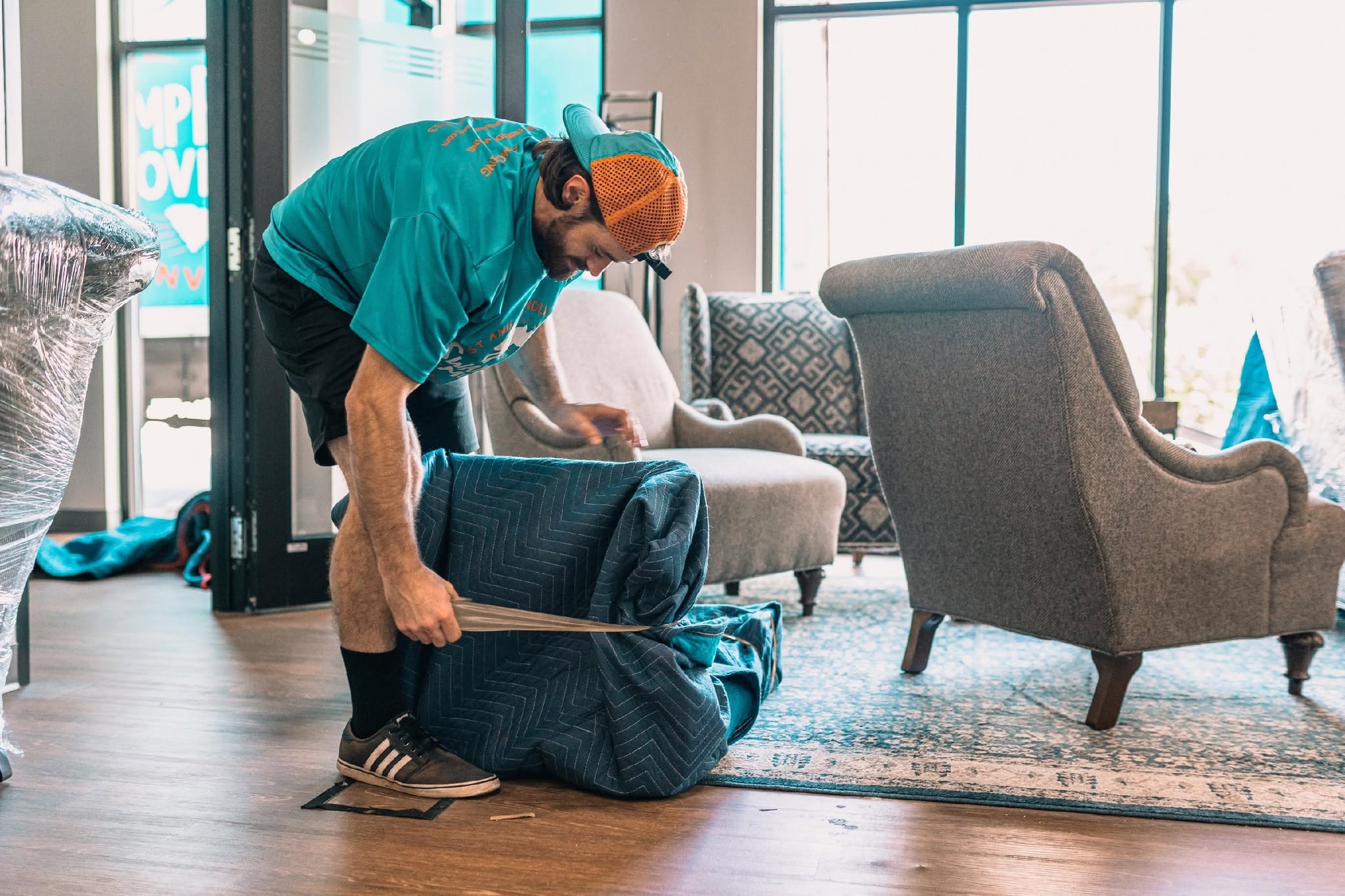
Packing always looks more manageable than it actually is. Most people sit down, think through what they own, decide it won't take long, and then find themselves three days before the move surrounded by half-filled boxes and a kitchen that hasn't been touched.
The problems that slow down a move and cause damage aren't usually dramatic. They're small decisions made during a busy week that compound by moving day. You know, the kind of thing you don't notice until it's too late. We've seen the same ones come up consistently, whether we're loading a two-bedroom apartment near USC or working out of a four-bedroom home in Blythewood.
Working with an experienced moving company can help you catch these mistakes before they happen, not after the truck is already packed. Here's what to watch for.
Using Boxes That Aren't Built for the Job
A box from a shoe purchase is not a moving box. Neither is an unchecked plastic bin or a grocery bag pressed into service for loose items. The box needs to match the weight and fragility of what's inside:
- Small, sturdy boxes for books and dishes
- Medium boxes for kitchen items with some heft
- Larger boxes for lighter things like linens and pillows, where volume matters more than weight
Boxes that are too light for their contents collapse under weight when stacked in the truck. Boxes that are too large let things shift and break during transport. Uniform, appropriately sized boxes stack cleanly, which protects everything loaded around and beneath them. It's a small detail that makes a big difference by the time the truck arrives.
One real benefit of packing services is that this decision gets handled for you. The right box, the right size, matched to what is going inside. No guessing on loading day, and no finding out the hard way that a shoebox wasn't up to the job. If you are even a bit unsure what works for a specific item, that's exactly the moment to ask someone who does this every day.
Packing Boxes Until the Top Won't Close Flat
Overpacked boxes show up on nearly every move we run across Columbia, from Shandon to Cayce to the Lake Murray area. The thinking is that fewer boxes means less time, but a box that bows at the bottom or won't seal flat is harder to carry without dropping and nearly impossible to stack without risking collapse. Overloaded boxes also put real strain on the people carrying them throughout the day.
Pack boxes firmly enough that nothing shifts around inside, but stop before the weight becomes a problem. For heavy items like books, cast iron pots, and hand tools, use smaller boxes and fill them only to a comfortable carrying weight. A simple test: if a packed box is difficult for one person to carry comfortably, it's too heavy.
Skipping Labels or Writing Ones That Don't Say Anything
Labeling might seem like a minor step, but it has a direct impact on how smoothly your move goes from the truck to the new space. A vague or missing label creates confusion that slows everyone down when it matters most. Here's a quick look at how the difference plays out:
- "Stuff" is not a label
- "Misc" tells the crew nothing about where a box belongs
- "Master bedroom, fragile, photo frames" tells us exactly where it goes and how carefully to handle it
When we arrive at the new address in Forest Acres or Lexington or wherever the move is going, we place boxes in the rooms they're labeled for. A box with no label or a vague one ends up in a hallway to be sorted later, which creates unpacking work that didn't need to exist.
Best practices for labeling:
- Label every box on at least two sides, because you can't predict how it will be turned or stacked during loading
- Include the destination room, a brief description of the contents, and any fragility notes
- If some boxes are going into storage rather than directly into the living space, mark that clearly too
It adds a few seconds per box and saves real time when we're unloading at the other end.
Waiting Too Long to Start Packing
This is the one that creates the most chaos on moving day. Packing always takes longer than it should, and most people figure that out with about 48 hours left before the crew arrives.
Closets have more in them than anyone remembered. The garage hasn't been touched. The kitchen became everyone's last priority because it's the most overwhelming room to take apart.
Start packing non-essential items two to three weeks before the move. Seasonal clothes, books, décor, items stored in spare rooms, and anything you won't need before moving day can all go in boxes early.
Work room by room, starting from the least-used areas and moving inward. If your move falls during Columbia's peak season between May and August, getting ahead of the packing timeline matters even more, since everything tends to compress faster during those months.
Not Protecting Fragile Items Properly Before They Go in a Box
A dish wrapped in one sheet of newspaper is not protected. A glass placed beside a cast iron pan in the same box is not going to arrive intact. Fragile items need cushioning on all sides, not just draped over the top. The goal is for nothing to move inside the box during transport and for nothing to contact anything harder or heavier than itself.
We include packing supplies with every booking, and our packing crew wraps fragile items correctly before they go into a box. If you're handling your own packing and running short on materials, don't treat clothing or soft household items as a finished solution.
Clothing shifts and compresses during transport more than purpose-built packing materials. Bubble wrap, packing paper, and box dividers are worth using, especially for anything in the kitchen or on a shelf that can't be replaced.
Mixing Items From Different Rooms Into One Box
It feels like a time-saver in the moment. A box with bathroom items, a few books from the living room, and a power strip from the home office can't go anywhere useful when it arrives at the new address. It ends up in a common area, and whoever is unpacking has to sort it, which undoes whatever time you thought you were saving.
Keeping each box limited to items from one room offers clear benefits:
- Makes the unload faster
- Makes your unpacking faster
- Reduces the chance of something fragile ending up next to something it should never be near during the move
If a room generates more boxes than expected, that's completely fine. Label them clearly and let us handle the volume.
Related Topics: