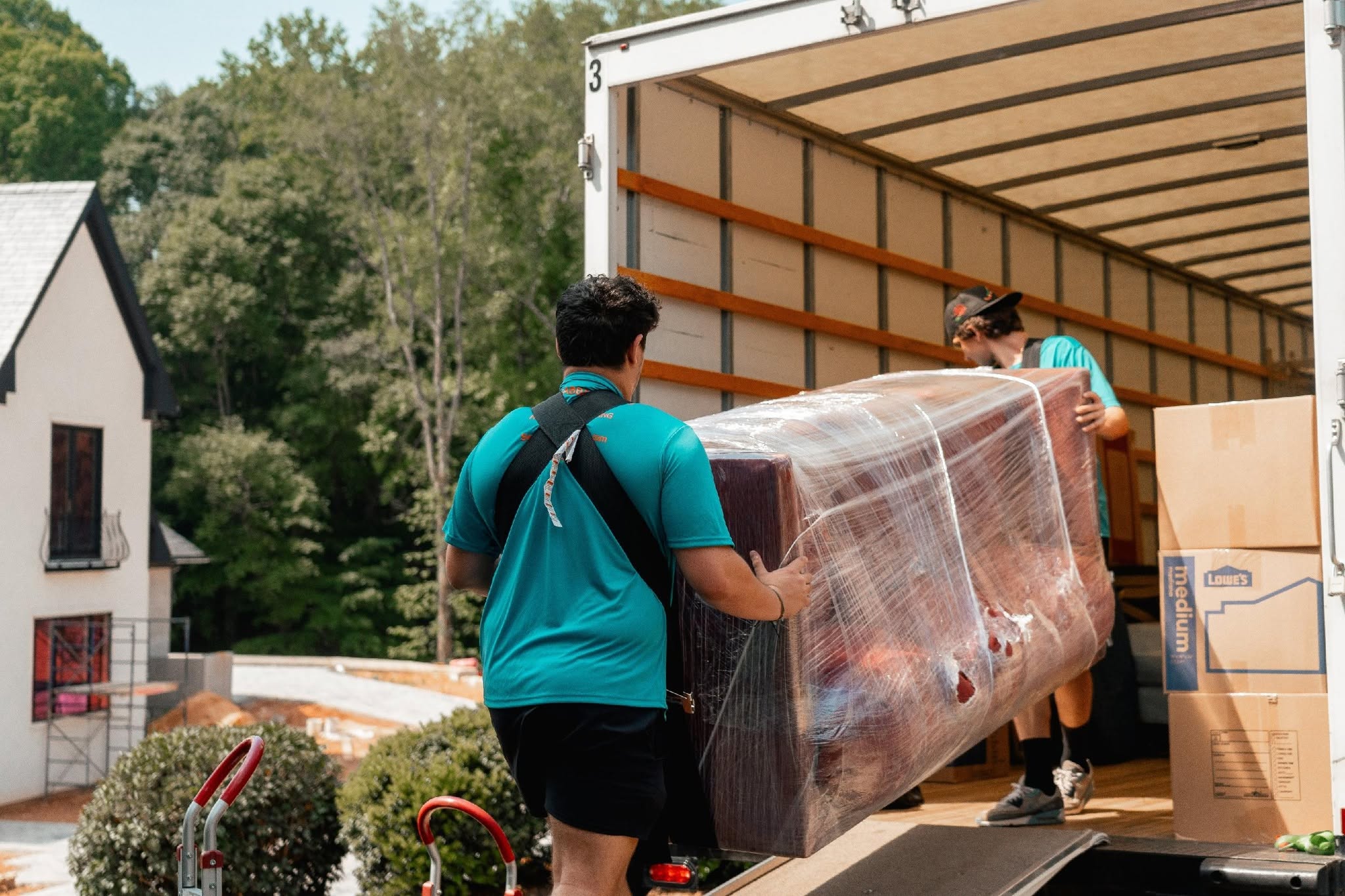
Heavy furniture gets damaged because of geometry and fatigue, not because someone was careless. A sectional that clears a doorway at the right angle will gouge the frame at the wrong one.
The wrong angle is just what a tired person picks at hour six. Our professional movers handle these pieces daily across Columbia, and as a trusted moving company we always start with a walkthrough before anything leaves the floor.
That walkthrough is where the tight staircase, the low hallway fixture, and the three-person piece get flagged. There is still time to plan around them at that point, which is kind of the whole idea. Measure your largest piece and your narrowest doorway this week, and you will already know where the hard part of your move is.
Why Heavy Pieces Cause Most of the Damage on Moving Day
Weight changes what a mistake costs. A box of books dropped on a hardwood floor leaves a mark, but a dresser dropped on the same floor leaves a repair. The pieces that go wrong most often sit in the middle of the weight range. They're heavy enough to be awkward, yet light enough that two people decide they can manage without equipment.
The other pattern is time pressure. Damage clusters in the last third of a move, once arms are tired and everyone just wants to be finished.
Pieces that were carefully padded in hour one get carried bare in hour five, and the corner that clipped the wall belonged to someone who had already made the trip eleven times. Planning the heavy items for the start of the job, while the crew is fresh and the truck is empty, is how most local moving services take out that risk before it develops.
Measure the Route Before You Lift Anything
The measurement that matters is not the furniture, it is the narrowest point on the path it has to travel. Think interior doorways, the turn at the bottom of a staircase, the width between a stair rail and the wall, the clearance in an apartment elevator. Write those numbers down, which is a bit tedious, and compare them against the height, width, and depth of each large piece.
Columbia has a lot of older housing stock, particularly in Shandon, Rosewood, and parts of Forest Acres. Those doorways and stairwells were built for furniture smaller than what people buy now.
An oversized sectional or a king bed frame that moved easily out of a newer build in Northeast Columbia can be a genuine problem going into a 1940s bungalow. Knowing the tight point in advance turns it into a planning question rather than a standoff in a hallway with the clock running, and it's usually what tips people deciding between full service vs. self-service.
Take Apart What Comes Apart
Anything that comes apart should come apart before it goes near a door. That means bed frames, table legs, sectional connectors, shelving units, and desk returns.
Smaller components clear tight spaces, load a lot more efficiently, and put far less strain on the people carrying them. Furniture disassembly and reassembly is included on every move our local moving crews handle, and it's the single step that clears up the most doorway problems.
Hardware management is where this goes wrong for people doing it themselves. Bag the screws, bolts, and Allen keys for each piece separately, label the bag, and tape it right to a component of the piece it came from.
Loose hardware in a shared container turns reassembly into a sorting exercise at the end of a long day, which is exactly when nobody has the patience for it. Bagging as you go barely adds anything to the average moving day timeline, and it saves a lot of grief later.
Not sure what's going to fit through that front door, or whether a bed frame can come apart without a fight? Give us a call at (803) 373-9885, and we'll sort it out with you before moving day.
Equipment That Does the Work Your Back Should Not
Most heavy furniture damage on a self-managed move traces back to a missing tool rather than a missing technique. The equipment list is short, and it's not expensive to rent.
- Four-wheel furniture dolly for dressers, safes, appliances, and anything that can stand upright and roll
- Appliance dolly with a strap for refrigerators, washers, and tall, narrow pieces that need to stay vertical
- Moving blankets, enough to cover every finished surface, not just the ones that look vulnerable
- Forearm straps or a shoulder harness for two-person carries, which shift load off the lower back
- Furniture sliders for moving pieces across a floor without lifting them at all
Sliders deserve a specific mention because they solve the repositioning problem. Most floor scratches happen when a piece is set down, then shoved eight inches to get it out of the way. Sliders under the feet make that move silent and harmless.
Rent the equipment too, you know. People think about the truck and forget the dolly. The dolly is what decides whether the furniture arrives intact rather than repaired.
Protecting Floors, Walls and Door Frames Under Load
Protection goes down before the furniture moves, not after the first mark appears. Ram board or heavy cardboard goes on hardwood and laminate, runners go down the main traffic path, and padding goes on the door frames the heaviest pieces have to pass through.
Corner guards on stair rails take about two minutes and prevent the most common wall damage in a two-story home.
For renters, this is a deposit issue rather than an aesthetic one. Scratched flooring and gouged drywall in an apartment near USC or downtown Columbia are among the most common reasons a security deposit gets withheld after a move-out.
The protection setup takes maybe fifteen minutes at the start of the job and costs less than any repair it prevents. It also keeps the crew moving, since nobody has to slow down at the doorway they are worried about.
When a Piece Is Beyond a Two-Person Lift
Some items are not a technique problem. Pianos, gun safes, pool tables, large aquariums, slate topped furniture and commercial grade appliances need specific equipment, more hands and a plan for the stairs. Attempting them short handed is how people get hurt and how floors get broken.
Declare these pieces when you get your estimate rather than on moving day. A piano nobody mentioned changes the crew size, the equipment on the truck and the length of the job. None of those can be fixed from the driveway. Knowing about it in advance lets us build the right configuration into the schedule, which is also what keeps the rest of your day on track.
Bring that list to your estimate. Walk your home this week with a tape measure and note every piece you would not want to carry down a staircase. That list is the real scope of your move. Handing it over before a date goes on the calendar is what gets you the crew size and the equipment the job actually needs.
Have questions about moving a heavy piece, or just want to talk through your options first? Contact us, and we'll help you figure out the right next step. You can also reach us at (803) 373-9885 or sales@swamprabbitmoving.com. We're here seven days a week from 7 AM to 10 PM.
Related Topics: