Most people assume their belongings are covered in storage the same way they were covered at home, and that assumption holds less often than it should. Coverage in storage comes from three separate places, and they do not overlap neatly.
Your homeowners or renters policy may extend off premises at a reduced limit. The facility carries coverage on its own building and operations. A moving company carries valuation on goods in its care.
Sorting out which one applies to which situation is worth half an hour before you sign anything. Storage coverage for household goods is one piece of a larger picture, which our complete guide to moving and storage for Greenville families lays out, and we would rather walk you through the whole picture during your estimate than have you discover a gap later.
What Storage Coverage Actually Protects Against
Coverage language tends to list named causes rather than promise blanket protection. Fire, theft, water intrusion from a burst pipe, and structural damage show up on most policies.
Gradual conditions usually do not. Mold, mildew, rust, warping from humidity, and damage from pests sit in exclusion territory on a great many policies, which is exactly where South Carolina summers do their work.
That gap is the reason facility conditions matter more than most people weigh them. A climate-controlled building with monitoring around the clock removes a category of risk rather than insuring against it, which is a stronger position to be in.
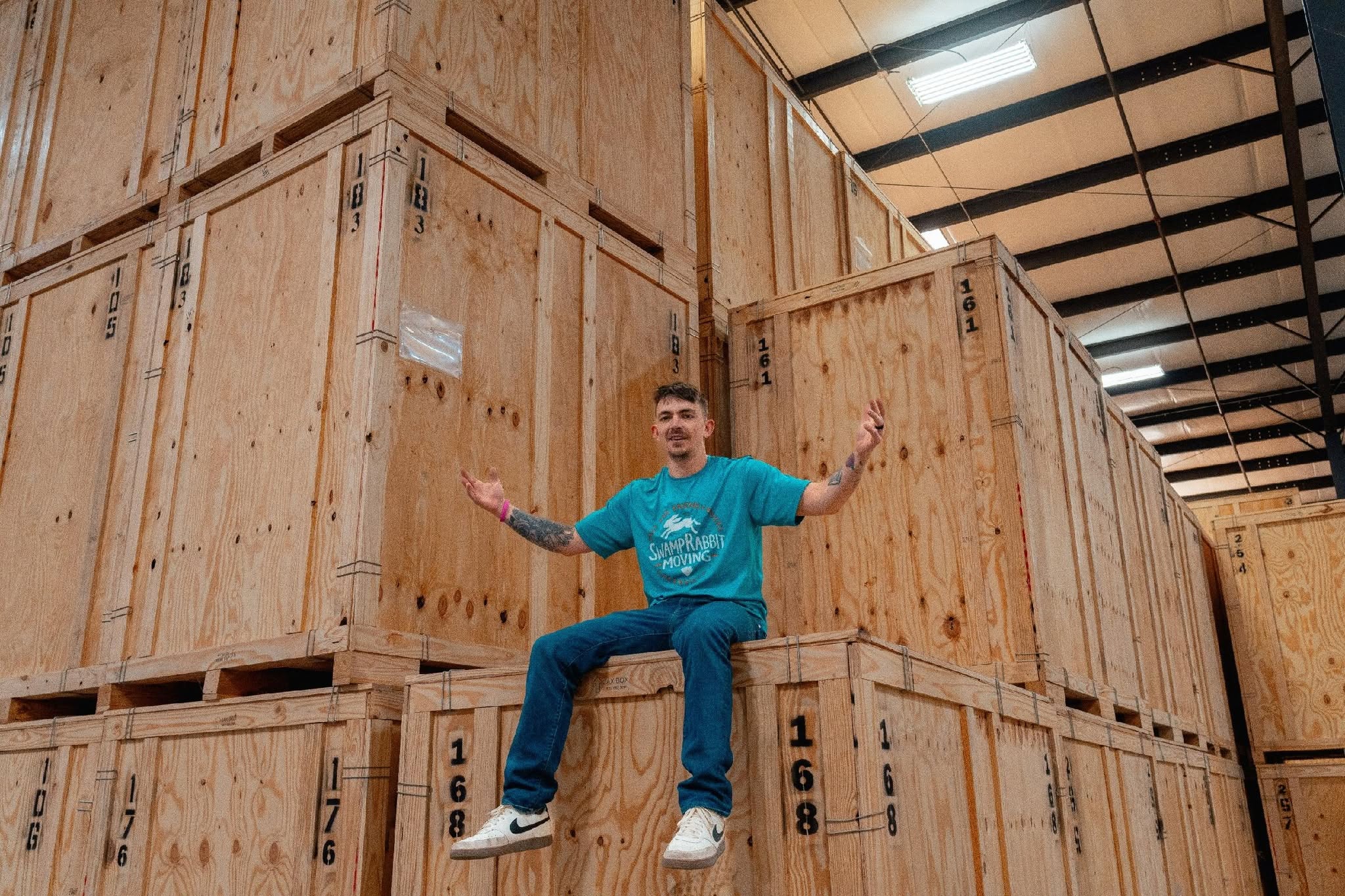
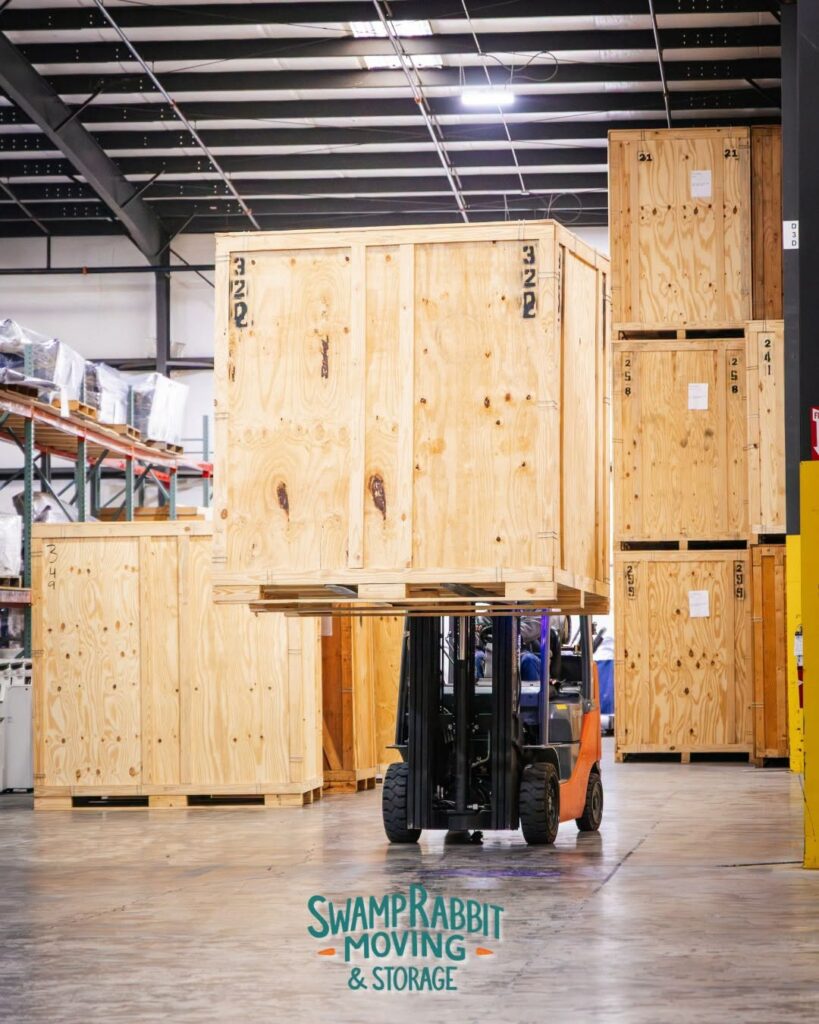
The type of storage changes your exposure too, since a sealed vault, open racking, and palletized storage each expose goods differently. Matching the storage method to what you are actually storing is the cheapest protection available to you, and our climate-controlled household storage offers each of those options.
How Homeowners and Renters Policies Treat Stored Items
Many homeowners and renters policies include off-premises coverage for personal property, and that is often the first line of protection for items in storage. The catch is the limit.
Off-premises coverage is commonly capped at a percentage of your total personal property limit rather than matching it, so a household that is fully covered at home can find itself significantly underinsured the moment the same furniture sits in a warehouse.
Sub-limits create the second surprise. Jewelry, firearms, artwork, collectibles, and business equipment frequently carry their own ceilings regardless of your overall limit, and those ceilings can be low enough to matter on a single item.
Call your agent before your belongings leave the house, tell them the storage is off premises and roughly how long it will last, and ask them in plain terms what the limit becomes and which categories are capped. Getting that answer in writing takes one email and settles the question.
Valuation Coverage During Transport Versus Storage
Valuation is not insurance, though it behaves like it in conversation. It is the level of liability a moving company accepts for goods in its care, and it is set by what you select on the paperwork rather than by what feels reasonable after something breaks.
Released value is the basic tier and pays by weight, which produces small settlements on light, costly items. Full value protection is the upgraded tier and is priced accordingly.
What trips people up is the handoff. Goods in transit and goods sitting in a warehouse are not always governed by the same terms, even when the same company handles both. Ask directly where transport liability ends and storage terms begin, and whether anything changes when belongings move from short-term to long-term.
We handle moving and storage under one roof with our own crews and no subcontracting, which keeps that boundary simple, but it still belongs in your written estimate rather than in your memory of a phone call.
Not sure what your belongings are covered for in storage? Ask us during your free written estimate, and we will walk through it line by line, with no obligation to book.
What to Ask Before You Sign a Storage Agreement
The agreement is where coverage questions get answered permanently, so treat the signing as the deadline for asking them. A short list covers the ground that matters most to a household putting furniture away for a season.
- What perils are covered, and which are listed as exclusions
- Whether any coverage is included by default or has to be purchased separately
- How declared value is set, and what documentation is required to support a claim
- What the deadline is for reporting damage after belongings come out of storage
- Whether terms change between short-term and long-term storage
- Who holds the inventory record, and whether you receive a copy
Documentation does the heavy lifting if anything goes wrong. Photograph high-value pieces before they load, keep receipts or appraisals for anything with a meaningful declared value, and hold onto your inventory list. Comparing short-term and month-to-month storage contracts before the appointment puts you in a better position to ask sharper questions.
How Facility Conditions Change Your Coverage Needs
A building that controls its environment reduces how much coverage you need to buy, because it removes the exposures that policies exclude.
Climate control holds temperature and humidity inside a band that wood, leather, electronics, instruments, and paper can tolerate across a Greenville August. Monitoring around the clock addresses theft and vandalism. Elevated, sealed storage addresses water.
Our Simpsonville warehouse runs 40,000 square feet of climate-controlled space under monitoring around the clock, with vaults, racking, palletized and oversized storage for pieces like boats, collector vehicles and pianos. Every residential move we handle includes two months of that storage at no cost.
Across more than 10,000 completed moves, we hold a claims rate under one percent and a 4.9-star average from more than 1,214 five-star reviews, which reflects conditions and handling rather than paperwork. Humidity remains the quiet risk in this climate, and humidity damage to stored furniture is worth understanding before you decide a cheaper non-climate unit is the better deal.
Storing a household in the Upstate and want the coverage question settled properly? Ask for a free written estimate, and we will cover storage terms, valuation, and building conditions in the same conversation.
Related Topics: