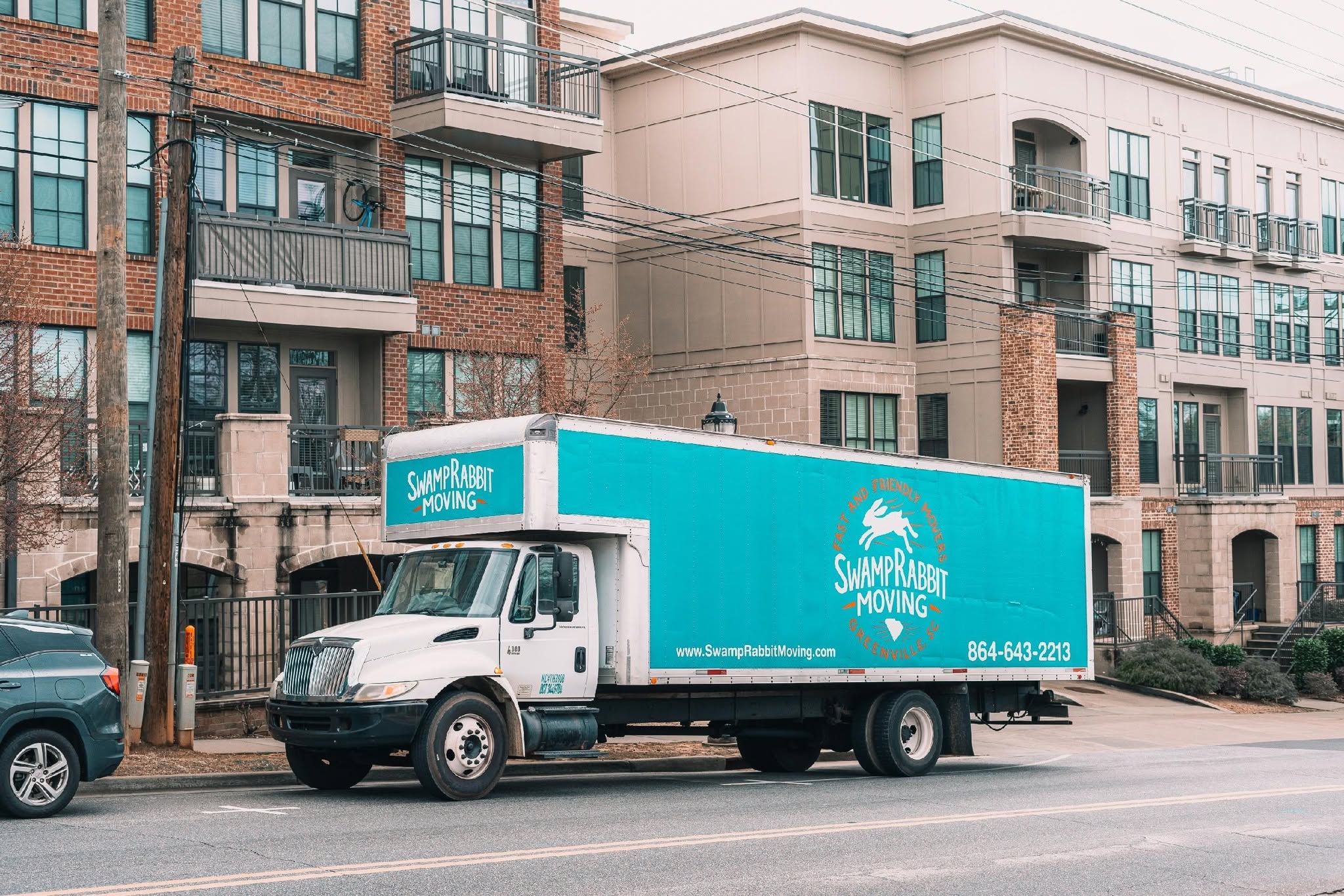
Everything you need to eliminate stress from your next move. Affordable moving, packing, and unpacking on residential, commercial, local, and long-distance moves.
We are mindful of getting the job done in a fast and efficient manner, all while still caring for your items. Ready to get your move on the road? Let our fast and friendly Rabbits get the job done for you!
We understand that moving can be stressful. At Swamp Rabbit Moving, we believe it doesn’t have to be! No matter where you’re moving to or from, whether it’s an apartment, a new house, or even long-distance, the Rabbits are here to make your move easy and reliable. We are licensed, bonded, and insured, so you can have peace of mind that your belongings are in good hands.
Why Some Moves Take Longer Than Expected in Columbia, SC
Almost every move that runs long runs long for the same three reasons. Access at one end was harder than anyone described. Packing was not finished when the crew arrived. Or an item surfaced on the day that nobody mentioned during the estimate.
As a leading moving company in Columbia, we have completed more than 10,000 jobs across our South Carolina operations. The walkthrough at the start of each one exists to catch those three things before the clock runs.
None of them are mysterious, and all of them are visible a week ahead if you look. Walk both addresses now and count the stairs, the doorways, and the distance from the parking spot to the door.
What an Hourly Estimate Actually Assumes
An hourly estimate is built on a set of assumptions, and the assumptions are what break rather than the arithmetic. A two-hour loading estimate for a two-bedroom, the kind most local moving services quote, assumes standard furniture volume and boxes already sealed.
It also assumes a truck that can park near the entrance and a clear path to the door. Change any one of those and the hours move.
The volume assumption is the one people underestimate most often. Closets, a garage, an attic, and a storage room hold far more than the room count suggests, and none of it appears in a description like "a three-bedroom house."
Telling a scheduler about the packed garage costs nothing during the estimate. Discovering it at eleven in the morning, you know, costs the difference between the estimate and the invoice.
Access Is the Biggest Variable in Columbia
Access is the difference between two similar homes taking four hours and seven. Stairs are the largest single factor, and it is not close. An upper floor apartment with no elevator can add an hour or more to an otherwise routine job. Every item makes the trip on someone's shoulders rather than on a dolly.
Columbia adds a few specific versions of this problem. Older homes in Shandon, Rosewood and parts of Forest Acres have narrow doorways and tight staircase turns that slow down every oversized piece.
Apartment buildings around Five Points, The Vista and the USC campus area hold elevators by reservation and restrict where a truck can sit. Downtown addresses often mean a long carry from the nearest legal parking spot, and long carries multiply across every single trip.
Access factor
Typical time added
Worth confirming before the day
Upper floor, no elevator
1 to 2 hours
Stair count and landing turns at both ends
Elevator building
45 to 90 minutes
Reservation window and whether it is shared
Long carry over 100 feet
1 hour or more
Where a 26 foot truck can legally park
Narrow doorways or tight stair turn
30 to 60 minutes
Width of the narrowest point on the route
Gated community or badge access
30 minutes
Gate codes, guest passes and truck clearance
Campus adjacent addresses in August are their own category. Move-in weekends put thousands of people into the same buildings across the same few days, and elevator queues and parking congestion affect every job in the area.
Our crews schedule campus adjacent jobs around those building windows for exactly that reason. Access looks a bit different with local vs long distance moving too, since a long haul means unloading at a far end you may never have seen.
Packing That Is Not Finished When the Crew Arrives
This is the most common cause of a long day, and the most avoidable. A crew arriving to find half the kitchen still in cabinets has two options, both of which cost time. They can wait, or they can pack it, and neither was in the estimate you agreed to.
Partly packed is worse than not packed at all. Open boxes cannot be stacked or loaded safely, so they get set aside and revisited, which breaks the loading rhythm and leaves gaps in the truck. Everything should be sealed, labeled with its destination room, and moved out of the walkways before the arrival window opens.
If you know you will not finish, book packing help instead of hoping to catch up on the morning. A packing crew works to a plan, and a moving crew ends up working around one.
Offices run into the same thing, and it's partly why office size impacts moving time more than most managers expect. Seal every box tonight, because a sealed and labeled box loads in seconds and an open one does not load at all.
Still have half a kitchen sitting in the cabinets and a move coming up in Columbia?Give us a call at (803) 373-9885, and we'll help you put together a packing plan before the crew shows up.
Scheduling Pressure and Why Later Jobs Run Late
Crews usually run either one large job or two smaller ones in a day. Business relocations sit outside that pattern, since our commercial moving crews often work evenings and weekends to keep a company off the clock.
If yours is the later residential job and the morning job ran long for any of the reasons above, your arrival window shifts. Reputable companies communicate that as soon as it is known, which is why a company that answers the phone on moving day matters more than most people expect.
You can manage this. Booking an early slot puts you ahead of the queue rather than behind someone else's surprise. End-of-month dates and summer Saturdays are the tightest, so those are the days when a mid-morning start is worth asking for.
Specialty Items That Change the Plan
A piano, a gun safe, a pool table, a large aquarium, or a slate-topped table is not simply a heavy item. Each one needs specific equipment, more hands and a different approach to stairs. None of that can be arranged once the crew is at your door with the truck half loaded.
Appliances create a similar problem more quietly. A washer nobody disconnected, a refrigerator nobody defrosted or a gas range needing a licensed disconnection all stop the job while someone deals with it.
Handle those the day before, maybe even two days before. Commercial moves carry their own version, where unlabeled IT equipment and uncleared filing cabinets stretch the timeline.
What You Can Control Before Moving Day
Most of the difference between an accurate estimate and a long day is decided in the week beforehand. Confirm elevator reservations and building windows at both addresses. Find out where the truck can legally park and reserve the space if the building or the city allows it.
Finish packing two days early rather than the night before. Clear the hallways, prop the doors and move your cars off the driveway. Then tell your scheduler the awkward things.
The garage nobody has opened. The piano in the back room. The apartment complex that only allows moves between nine and four. A crew that knows about an obstacle can plan around it, and a crew that discovers it is already losing time.
Ask for the assumptions. Request a written estimate that spells out what the hours are based on, then check each assumption against your own two addresses. If one of them does not hold, you have found your delay while there is still time to do something about it.
Have questions about your estimate, or just want to talk through the details of your move first? Contact us, and we'll help you figure out the right next step. You can also reach us at (803) 373-9885 or sales@swamprabbitmoving.com. We're here seven days a week from 7 AM to 10 PM.
We began as a small company, me and a few guys, and 1 truck in October of 2020. Since then, we have grown to 19 trucks, a staff 60, and a 40,000-square-foot warehouse. To say I’m blessed with a great team is a vast understatement. During this journey, we have provided living wage jobs to all our employees and poured back into our community in big ways. That is something I’m truly proud of.