Most furniture damage does not happen in the truck. It happens in a doorway, on a landing, or at the bottom of a staircase where somebody decided the sofa would probably fit. Probably is the word that costs people money.
Large pieces are heavy, awkwardly balanced, and usually worth more than the people carrying them assume. Our crews move them across Simpsonville and Greenville County every week, and almost everything that goes wrong traces back to one of four things. Nobody measured, nobody took it apart, nobody wrapped it properly, or nobody had enough hands. Our local movers handling heavy lifting deal with all four as a matter of routine, but if you are tackling a piece yourself, here is how to do it without hurting the furniture or yourself.
Measure Before You Lift Anything
Measure the piece, then measure the path. Height, width, and depth for the furniture. Doorway width, hallway width, stairwell turns, and ceiling clearance for the route. Write both sets down rather than holding them in your head, because the numbers that matter are the smallest ones and they are easy to lose track of.
The measurement people skip is the diagonal. A sofa that is too tall for a doorway standing up will often pass through on its side or angled, and the diagonal measurement across the back tells you whether that works before you have it wedged. Stairwell landings are the other common failure point, because the turn needs enough clearance for the length of the piece swinging through an arc rather than just traveling in a straight line. If the numbers are close, they are not close enough. Find another route or take the piece apart.
Take It Apart Where You Can
Disassembly is the cheapest protection available. Every component removed makes the piece lighter, narrower, and less likely to catch on a frame. It also means a damaged leg is a damaged leg rather than a damaged table.
Work in a sensible order and keep track of what comes off. Photograph each stage before you undo it, bag the hardware for each piece separately, and tape the bag to the underside of the item it belongs to. Common candidates for disassembly include:
- Bed frames, headboards and slat systems
- Dining table legs and extension leaves
- Sectional sofas separated at their connectors
- Desk and table legs attached with bolts rather than glue
- Shelving units with removable shelves and backing panels
- Mirrors and glass tops detached from dressers and cabinets
Reclining and sectional pieces reward a careful approach because their mechanisms are heavier and more fragile than the frame around them. The walkthrough on how to take apart a sectional sofa safely covers the order that keeps the mechanism intact. Our crews build this into the standard service, so disassembly at your old place and reassembly at the new one is not a separate charge for most items.
Dealing with a piece that will not fit through a doorway? We do this every day. Call (864) 643-2213 for a free, itemized estimate on your Simpsonville move.
Wrapping That Protects the Piece
Wrapping is where most self moves go wrong, and usually through generosity rather than neglect. People use plenty of material, just the wrong material in the wrong order. Shrink film applied straight onto wood traps moisture against the finish, and over a warm South Carolina week that can haze or blister a surface that left the house perfect.
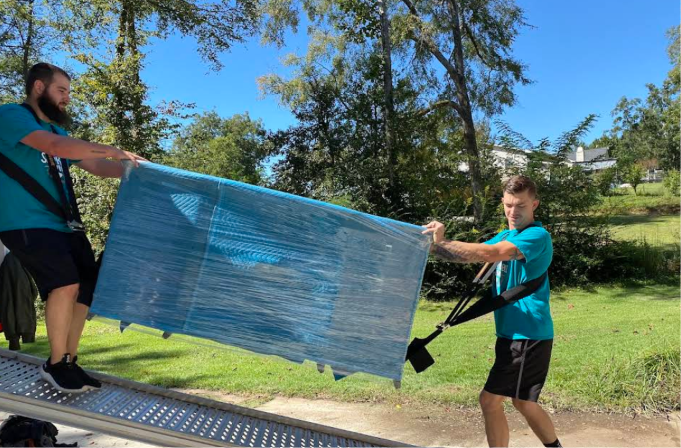
The order is blankets first, then film to hold the blankets on. Corners take the most abuse, so double the padding there and on any protruding leg or arm. Glass and mirrors need cardboard on both faces before anything soft goes near them, taped across the face in an X so the pane holds together if it does crack. Upholstery needs a cover that keeps dust and moisture out for the whole trip. Leather needs blankets rather than plastic against the hide. There is more technique than it first appears, and the detail on how to wrap furniture to prevent scratches is worth reading before you buy supplies.
Lifting Technique and the Risk of Doing It Alone
A loaded dresser, a full bookcase, or a sleeper sofa can run well past 200 pounds, and the weight is rarely centered. Lift with your legs, keep the load close to your body, and never twist while carrying. On stairs, the person at the bottom carries more and sets the pace, and the person at the top controls the angle.
Use equipment rather than willpower. Furniture sliders move heavy pieces across floors without lifting at all. A four-wheel dolly handles anything boxy. Lifting straps shift load onto larger muscle groups and free up your hands. What none of that solves is the fundamental problem, which is that two untrained people on a staircase with a heavy, awkward object is how backs, walls, and floors get damaged. The real cost is worth understanding before you commit, and the breakdown of injury risks of lifting furniture yourself is a sober read if you are weighing a DIY weekend against a crew.
When Hiring a Crew Is the Cheaper Decision
There is a point where doing it yourself stops saving money, and it arrives earlier than most people expect. Add up the truck rental, fuel, dolly and strap rental, pads, film, and the value of a weekend. Then add the risk, because a gouged hardwood floor or a cracked door frame in a house you are selling can wipe out the savings several times over.
Trained crews move heavy pieces faster and with less damage because they have done it thousands of times and they carry the right equipment as standard. We run 17 trucks and 65 staff out of Simpsonville, and our claims rate sits under 1 percent across more than 10,000 completed moves. Our estimates are free, written, and itemized before anything is confirmed, so you can put a real number next to the DIY figure and decide with actual information rather than a guess.
Have a piano, a safe, or a piece you would rather not risk? Call (864) 643-2213 or contact us, and we will give you a free written estimate before you commit to anything.
Related Topics: